Schools in the UAE
There are more than 650 private schools in the UAE, teaching 17 curriculums across all seven emirates, from British and Indian to American and IB. Fees range from around AED 2,000 to over AED 140,000 a year, and five separate regulators oversee the schools. Your home emirate does not limit where your child can study, so you can consider options across the whole country. Compare schools by curriculum, fees, location and inspection rating, all in one place, and find the right fit for your family.
Top-rated schools across the UAE
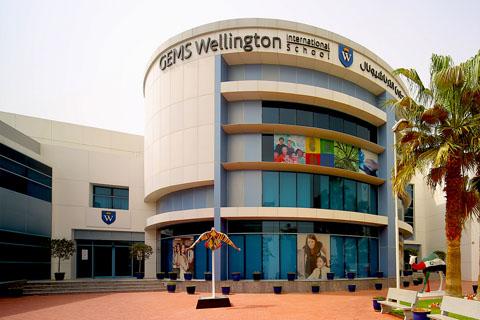
Gems Wellington International School (Al Sufouh 1)
Al Sufouh First, Dubai
Foundation Stage 1 (Nursery) to Year 13
46,000 to 101,500Yearly

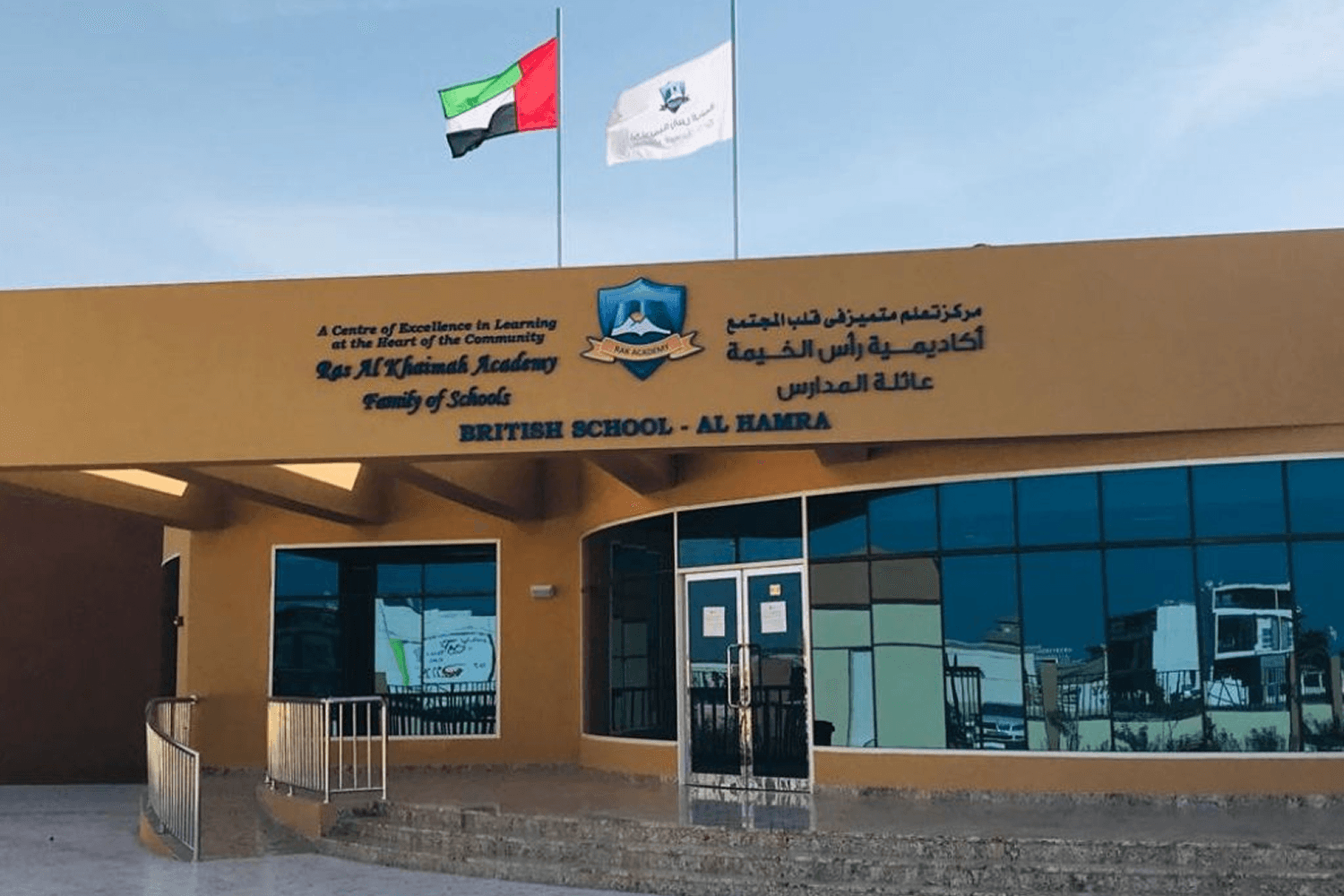
Ras Al Khaimah Academy (Al Hamra)
Al Hamra, Ras Al Khaimah
Foundation Stage 1 (Nursery) to Year 5
18,500 to 35,000Yearly
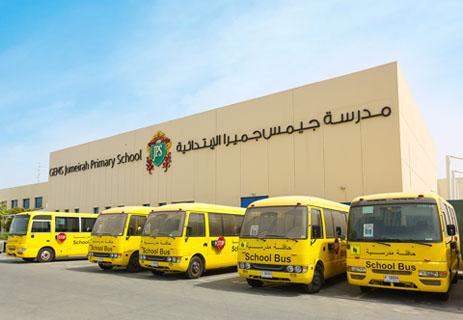
Gems Jumeira Primary School (Al Safa 1)
Al Safa First, Dubai
Foundation Stage 1 (Nursery) to Year 6
43,000 to 54,500Yearly
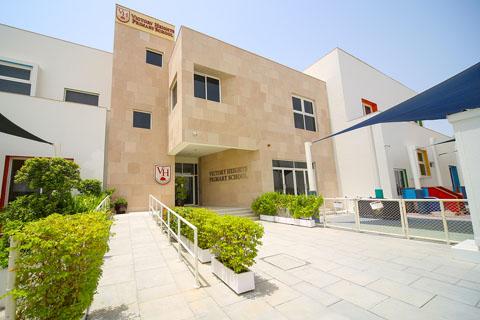
Victory Heights Primary School
Dubai Sports City, Dubai
Foundation Stage 1 (Nursery) to Year 6
39,000 to 53,500Yearly
Your child can attend school in any emirate
Private school places in the UAE are open to families regardless of where they live, so a home in one emirate does not limit you to its schools. Many parents choose a school just across an emirate border because of the curriculum, the fees, or the drive to work.
Browse schools by city
Dubai
219 schools
The UAE's largest school market, with 227 schools and more than 387,000 pupils. Seventeen curriculums sit side by side here, so most families find their preferred system within a short drive.
Abu Dhabi
175 schools
The capital's schools are regulated by ADEK, which also runs charter schools that are free for Emirati children. Fourteen curriculums are on offer across the city.
Sharjah
132 schools
Regulated by SPEA, Sharjah offers a wide mix of curriculums and is popular with families commuting to Dubai. Its recent Itqan inspections placed most schools at Good or above.
Al Ain
75 schools
A greener, more relaxed inland city where ADEK oversees the same standards as the capital. Fees here tend to sit below Abu Dhabi and Dubai averages.
Ajman
42 schools
A compact city overseen federally by the Ministry of Education. Indian and British schools feature strongly, often at more accessible fees.
Ras Al Khaimah
32 schools
Home to more than 35,000 pupils and regulated by RAKDOK, which awarded the city its first Outstanding rating in 2026. A growing choice for families moving north.
Fujairah
12 schools
The east-coast city on the Gulf of Oman, overseen by the Ministry of Education. A smaller, close-knit set of schools serving local and expatriate families.
Umm Al Quwain
7 schools
A quiet coastal city regulated federally by the Ministry of Education. A compact selection of schools within easy reach of Ajman and Sharjah.
Browse schools by curriculum
British curriculum
The most widely offered system in the UAE, following the English National Curriculum through IGCSE and A Levels. A familiar choice for many expatriate families and a smooth fit if you may move between countries.
American curriculum
Based on US state standards and often leading to a High School Diploma with AP courses. Widely available in Dubai and Abu Dhabi, and the model behind Abu Dhabi's charter schools.
Indian curriculum (CBSE & ICSE)
Following CBSE or ICSE frameworks, these schools are among the most affordable in the country and serve one of the UAE's largest communities. Strong in Dubai, Abu Dhabi, Sharjah and Ajman.
International Baccalaureate (IB)
An inquiry-led international programme from the Primary Years through the Diploma, recognised by universities worldwide. Concentrated in Dubai, with a growing presence in the capital.
Browse by city
Understanding schools in the UAE
Private schooling is the norm in the UAE. Because most residents are expatriates, the country has built one of the world's most varied private-school markets, with 650+ schools teaching around 17 curriculums, from British and American to Indian, IB, French, German, Filipino, Pakistani and more. Dubai alone offers 17 systems and Abu Dhabi 14, so families can usually keep their children in a familiar curriculum wherever they move. Communities cluster around particular systems: British and IB schools are the most widespread, Indian schools serve one of the largest populations, and American schools are strong in Dubai and the capital. All private schools teach Arabic and, from the 2025-26 year, deliver at least 200 minutes of Arabic a week in kindergarten, rising to 300 minutes by 2027-28. Islamic studies and moral education are also part of the timetable.
Private school fees in the UAE run from roughly AED 2,000 to more than AED 140,000 a year, with a national average around AED 42,000. What you pay depends far more on the curriculum and the individual school than on the emirate. As a rough guide, Indian CBSE schools sit at the accessible end (about AED 15,000 to 55,000), while British (AED 25,000 to 120,000), American (AED 45,000 to 95,000) and IB (AED 45,000 to 115,000) schools span the middle and upper ranges. Each regulator sets the rules on how fees can rise. In Dubai, KHDA links annual increases to an Education Cost Index, set at 2.35% for for-profit schools in 2025-26, and then froze all private school fees for 2026-27 as part of the emirate's economic incentives package. Abu Dhabi's ADEK, Sharjah's SPEA and RAK's RAKDOK each run their own fee frameworks. Remember that registration, uniforms, transport and books sit on top of tuition.
Each regulator inspects schools in its own way, so ratings do not transfer directly between emirates. Dubai's KHDA grades schools from Outstanding to Weak, though routine inspections were paused for 2024-25 and 2025-26 and are due to resume in 2026-27; the current standings still show 23 Outstanding and 48 Very Good schools. Abu Dhabi's ADEK runs the Irtiqaa framework, with its latest cycle (October 2025) placing 13 schools Outstanding and 51 Very Good. Sharjah's SPEA uses Itqan, and its July 2026 results recorded its first Outstanding school and no Weak ones. RAK's RAKDOK, working with Etio Global, awarded the emirate its first-ever Outstanding rating in 2026. Ajman, Fujairah and Umm Al Quwain fall under the Ministry of Education. Because the scales differ, treat a rating as one useful signal rather than a like-for-like score, and read it alongside fees, curriculum and location.
From the 2026-27 academic year, the UAE is moving to a single 31 December age cutoff for school entry, replacing the previous 31 August date. In practice this means a child must reach the required age by 31 December of the entry year: age 3 for FS1, age 4 for KG1 and age 6 for Grade 1. The change gives some younger children an extra term of eligibility and makes entry ages more consistent across schools and emirates. Schools that follow the Indian or Pakistani April-start calendar keep a 31 March cutoff instead, so the timing matches their own academic year. If your child sits close to a cutoff, it is worth asking each school how they are applying the transitional rules, as some manage the shift over more than one intake.
A good rule of thumb is to start looking 9 to 12 months before you want your child to begin, as the most sought-after schools fill early and popular year groups can carry waiting lists. Begin by deciding which curriculum suits your family and how long you expect to stay in the UAE, then set a realistic fee budget including transport and extras. Shortlist a handful of schools (many parents apply to three or four) and, where you can, visit in person to get a feel for the classrooms and staff. Assessments, registration fees and required documents vary by school, so check each one's process. Schoolsery brings every school's fees, curriculum, location and rating into one place so you can compare properly, without chasing information across separate regulator websites.
Choosing a School in the UAE
Our complete parent guide: comparing curriculums, understanding inspection ratings and fees, admissions, school visits and more.
Not sure where to start?
Answer a few quick questions and we'll email you a personalised shortlist of schools in the UAE.
Take the 2-minute quizFrequently asked questions
There is no single best emirate. The right choice depends on your family. Dubai has the widest range with 227 schools and 17 curriculums, Abu Dhabi offers 220 schools including free charter options for Emiratis, and Sharjah, Ras Al Khaimah and the northern emirates often provide the same curriculums at more accessible fees. Most parents weigh commute, curriculum, fees and community rather than the emirate itself. You can compare all seven side by side on Schoolsery.
Yes. Private school places in the UAE are not tied to your residential emirate, so you are free to choose a school across an emirate border. Many families in Sharjah or Ajman, for example, send their children to schools in Dubai, or pick a school near a parent's workplace. The main things to weigh are the daily commute and school transport, rather than any residency rule.
Each regulator uses its own inspection framework: KHDA in Dubai, ADEK's Irtiqaa in Abu Dhabi, SPEA's Itqan in Sharjah and RAKDOK in Ras Al Khaimah, so ratings are not directly interchangeable. Most use a scale from Outstanding down to Weak, but the criteria and timing differ. Treat a rating as one helpful indicator alongside fees, curriculum and your own visit, rather than a single score that ranks schools across emirates.
Fees range from about AED 2,000 to more than AED 140,000 a year, with a national average around AED 42,000. Indian CBSE schools tend to be the most affordable, while British, American and IB schools span the middle and upper ranges. The emirate matters less than the curriculum and the individual school. Remember to budget for registration, uniforms, transport and books on top of tuition.
Around 17 curriculums are taught across the country. The most widely available are British, Indian (CBSE and ICSE), American and IB, followed by French, German, Filipino, Pakistani and others. Dubai offers all 17 systems and Abu Dhabi 14, so most families can find their preferred curriculum. Availability thins out in the smaller emirates, where British and Indian schools are the most common.
Charter schools are government-funded schools in Abu Dhabi that follow an American-influenced curriculum with an emphasis on Arabic and Emirati identity. There are 31 of them, offering around 46,500 places, and they are free for Emirati children. They are overseen by ADEK. Expatriate families generally choose from the emirate's private schools instead.
Yes. All private schools teach Arabic, and from 2025-26 the UAE requires at least 200 minutes of Arabic a week in kindergarten, rising to 300 minutes by 2027-28. Arabic-speaking and non-Arabic-speaking pupils follow different pathways. Islamic studies and moral education also feature on the timetable. This applies across all emirates, whatever the school's main curriculum.
From 2026-27, a child must reach the required age by 31 December of the entry year, replacing the old 31 August date. That means age 3 for FS1, age 4 for KG1 and age 6 for Grade 1. Schools following the Indian or Pakistani April calendar keep a 31 March cutoff. If your child is near a cutoff, ask each school how it is applying the transitional rules.
Aim to start 9 to 12 months before your child's intended start date. Sought-after schools and popular year groups fill early and may hold waiting lists, so an early start gives you room to compare, visit and complete assessments without pressure. If you are relocating to the UAE, begin researching before you arrive so you can line up visits for when you land.
Many parents apply to three or four schools to balance choice against the cost and effort of registration fees and assessments. Shortlist the ones that match your curriculum, budget and location, then visit where you can before committing. Applying too widely can get expensive, while applying to only one leaves little fallback if a place does not come through. Schoolsery helps you build and compare a shortlist in one place.
Looking for a nursery instead?
Are you a school in the UAE?
Claim your profile to reach parents actively searching and comparing schools on Schoolsery.