British Schools in Dubai
Dubai is home to 90+ British curriculum schools, the most widely offered curriculum in the city. Regulated by the Knowledge and Human Development Authority (KHDA), these schools follow the English National Curriculum from the Early Years Foundation Stage through to A-Levels. Whether you are narrowing down by fees, location or KHDA rating, this page covers the key details to help you compare your options.

Top-rated British schools in Dubai
The highest-rated British curriculum schools in Dubai based on their latest KHDA inspection.
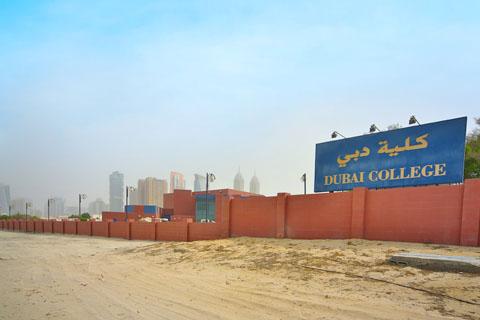
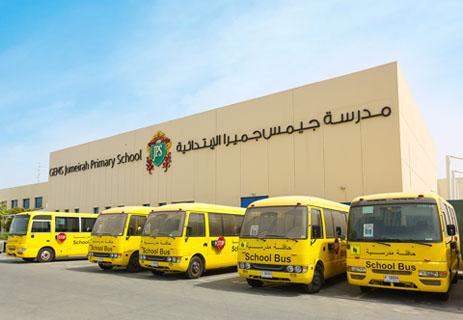
Gems Jumeira Primary School (Al Safa 1)
Al Safa First, Dubai
Foundation Stage 1 (Nursery) to Year 6
43,000 to 54,500Yearly
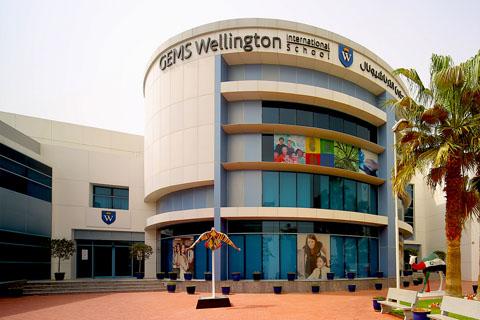
Gems Wellington International School (Al Sufouh 1)
Al Sufouh First, Dubai
Foundation Stage 1 (Nursery) to Year 13
46,000 to 101,500Yearly
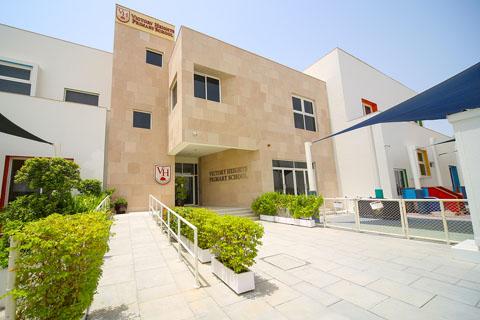
Victory Heights Primary School
Dubai Sports City, Dubai
Foundation Stage 1 (Nursery) to Year 6
39,000 to 53,500Yearly
Best value & affordable British schools in Dubai
British schools rated Good or above with starting fees under AED 45,000 a year.
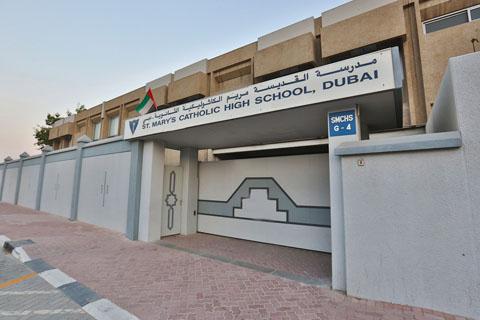
St. Mary'S Catholic High School Dubai (Umm Hurair)
Umm Hurair, Dubai
Year 1 to Year 13
7,000 to 15,000Yearly
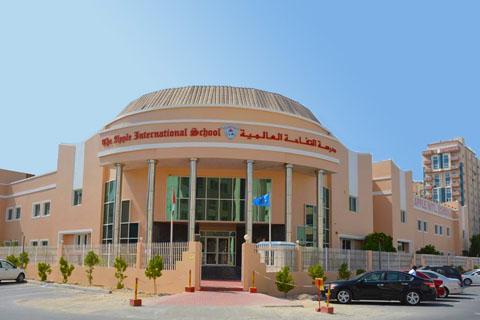
Apple International School
Al Qusais First, Dubai
Foundation Stage 1 (Nursery) to Year 13
7,000 to 27,500Yearly
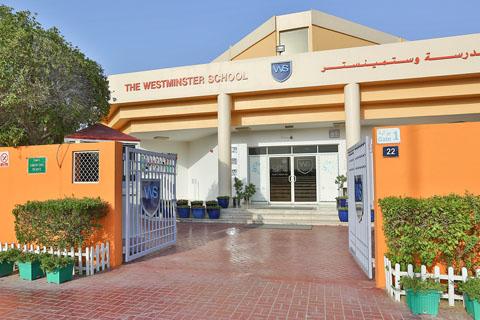
The Westminster School
Al Qusais First, Dubai
Foundation Stage 1 (Nursery) to Year 13
8,500 to 17,500Yearly
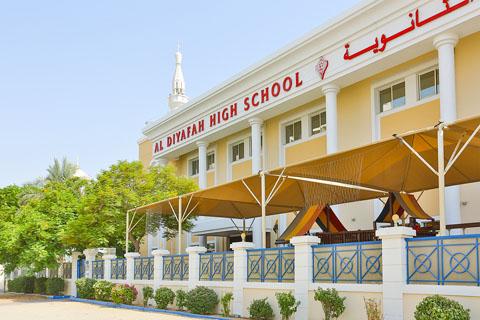
Al Diyafah High School
Al Nahda First, Dubai
Foundation Stage 1 (Nursery) to Year 13
9,000 to 20,500Yearly
British curriculum structure
EYFS
Ages 3-5
Foundation Stage, play-based learning across seven areas of development.
Key Stage 1
Ages 5-7
Years 1-2, building core literacy and numeracy.
Key Stage 2
Ages 7-11
Years 3-6, the upper primary phase.
Secondary (KS3 to A-Level)
Ages 11-18
Years 7-13, covering Key Stage 3, IGCSE examinations, and A-Level or BTEC university preparation.
About British schools in Dubai
The British curriculum is the most popular choice among private school families in Dubai, attracting a broad cross-section of European, Middle Eastern and international expat communities. Schools follow the English National Curriculum, structured around clearly defined key stages from the Early Years Foundation Stage (EYFS) through to Key Stage 5 (A-Levels). Alongside core subjects, all British curriculum schools in Dubai integrate mandatory Arabic language, Islamic Studies for Muslim students and UAE Social Studies, as required by KHDA. Many operate as all-through schools covering FS1 to Year 13, giving families continuity without changing schools at transition points. The IGCSE is heavily favoured over the domestic GCSE in Dubai, as the international variant is designed for diverse cohorts and places less emphasis on continuous coursework. Major exam boards include Pearson Edexcel, Cambridge International, AQA and OCR. The academic year runs from September to late June across three terms.
Dubai's British curriculum schools span a notably wide fee range, from AED 4K to 117K a year, from community-focused campuses at the lower end to the city's top-tier UK schools at the upper end. This breadth means families at most budget levels can access a British education. Fees typically increase as students progress through the key stages, with noticeable jumps at the IGCSE and A-Level stages due to the additional resources, specialist teachers and smaller class sizes those years require. KHDA regulates annual fee increases, and schools must apply for approval before raising tuition. When budgeting, also factor in registration fees, uniforms, exam fees for IGCSEs and A-Levels, and any charges for activities or transport. Compared to IB schools in Dubai, British schools generally offer a wider range of price points, while Indian schools tend to sit at a lower fee band overall.
KHDA inspects every private school in Dubai annually and assigns a rating on a six-point scale: Outstanding, Very Good, Good, Acceptable, Weak and Very Weak. Among Dubai's 90 British schools, 17 are rated Outstanding, with a further group rated Very Good, the largest share rated Good, and the remainder rated Acceptable or newly opened and awaiting their first inspection. The framework evaluates student achievement, personal and social development, teaching quality, curriculum delivery, safeguarding and leadership. Full inspection reports for each school are published on the KHDA website and are a valuable resource when shortlisting.
Students graduate from Dubai's British schools with IGCSE and A-Level results that are accepted by universities in every major study destination. Because A-Levels ask students to go deep in just three or four subjects, they suit applicants with a settled academic direction, and UK admissions teams, including those at Russell Group universities, read them as evidence of subject mastery. Dubai's large and mobile expat community tends to value how portable these qualifications are, since the same results support applications to the UK, Europe, North America, Australia and universities inside the UAE, with the SAT or ACT added for most US applications. Dubai is also unusual in how many alternatives it offers if a student's plans change, as a number of schools run the IB Diploma or BTEC vocational routes alongside A-Levels.
Admissions at British schools in Dubai typically open 12 to 18 months before the intended start date, particularly at oversubscribed schools rated Outstanding or Very Good. The main entry points are FS1 (age 3-4), Year 1 (age 5-6) and Year 7 (age 11-12, the start of secondary school), and most schools run cognitive ability tests or entrance assessments from Year 7 onwards. Required documents generally include the application form, the child's passport and Emirates ID, previous school reports, immunisation records and a transfer certificate. Families moving from an American or IB curriculum should note the British system is structured around year groups rather than grades, so a child in Grade 6 would typically enter Year 7. Switching in during Year 10 or Year 12 is challenging because IGCSE and A-Level syllabi are linear across two years. The UAE has confirmed a new age cutoff of 31 December, effective from the 2026-27 academic year.
Comparing curriculums in the UAE
Compare the British, American, IB and Indian curriculums: fees, structure, exams and which pathway is right for your child.
Not sure where to start?
Answer a few quick questions and we'll email you a personalised shortlist of schools in Dubai.
Take the 2-minute quizFrequently asked questions
Fees range from AED 4K to 117K a year, depending on the school's location, facilities and education level. Fees are generally lowest at the Foundation Stage and increase at the IGCSE and A-Level stages. KHDA regulates fee increases across all private schools.
17 British schools currently hold KHDA's Outstanding rating, the highest category in the inspection framework. A further group of schools are rated Very Good. KHDA publishes full inspection reports for every school on its website.
Children can enter Foundation Stage 1 (FS1) from age 3, turning 4 during the academic year. The UAE is introducing a new age cutoff of 31 December from the 2026-27 academic year, which will apply to entry at all levels.
Students sit IGCSE or GCSE exams at the end of Year 11 (age 15-16) and A-Level or BTEC exams at the end of Year 13 (age 17-18). IGCSEs are more common in Dubai as they are tailored for international students. Exam boards include Pearson Edexcel, Cambridge, AQA and OCR.
Yes, transfers are most straightforward during the primary years. The main consideration is the difference in year-group structures, so a child in American Grade 6 would typically move into British Year 7. Transferring during Years 10-11 (IGCSE) or Years 12-13 (A-Levels) is more complex due to the linear exam structure.
A-Levels are widely recognised by universities across the UK, Europe, Australia, Canada, the US and the UAE. Students applying to US universities will usually also need SAT or ACT scores alongside their A-Levels.
The IGCSE (International GCSE) is designed for students studying outside the UK. It covers similar content to the GCSE but typically places less emphasis on continuous coursework and more on final examinations, making it better suited to international school settings.
Yes, all private schools in Dubai must teach Arabic as a subject, regardless of curriculum. Islamic Studies is mandatory for Muslim students, and UAE Social Studies (Moral Education) is required for all students. These are integrated into the timetable alongside the English National Curriculum.
Not necessarily. KHDA ratings reflect a school's overall performance across multiple areas, but the right school depends on your child's needs, your location and your budget. A Good-rated school close to home with a strong community feel can be a great fit even next to an Outstanding school with a long commute. Visit shortlisted schools and speak with other parents before deciding.
Generally, no. British schools in Dubai follow the same English National Curriculum and use the same exam boards (Edexcel, Cambridge, AQA) as schools in the UK. The main adjustment is usually social rather than academic, and students sitting IGCSEs or A-Levels in Dubai take the same papers as their UK counterparts, so qualifications transfer directly.
For a place at a UAE public university or a government role, yes. Graduates apply to the Ministry of Education for an equivalency certificate, known locally as the muadala, which formally equates their IGCSE and A-Level results to the UAE secondary certificate. The ministry expects a minimum spread of subjects across both levels, so it is worth planning subject choices with that in mind. Most international and private universities accept A-Levels directly.
Find more schools across the UAE
Other curriculums in Dubai
British schools in other cities
Are you a British school in Dubai?
Reach parents actively searching for British schools on Schoolsery.