American Schools in Dubai
Dubai is home to 64+ American curriculum schools, offering a flexible K-12 pathway built around continuous assessment and a broad range of electives. Regulated by the Knowledge and Human Development Authority (KHDA), these schools follow US standards including the Common Core and AERO frameworks. Whether you are comparing fees, KHDA ratings or AP course availability, this page covers the key details to help you compare your options.

Top-rated American schools in Dubai
The highest-rated American curriculum schools in Dubai based on their latest KHDA inspection.
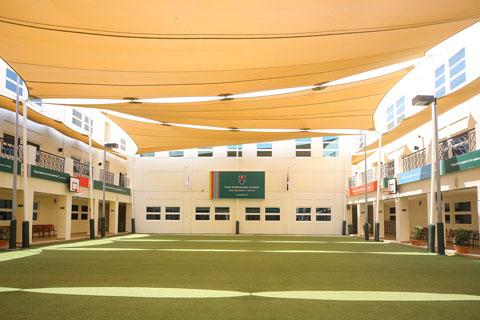
Dubai International Academy (Emirates Hills)
Al Thanyah Fifth, Dubai
PYP2 to DP2
43,500 to 78,000Yearly
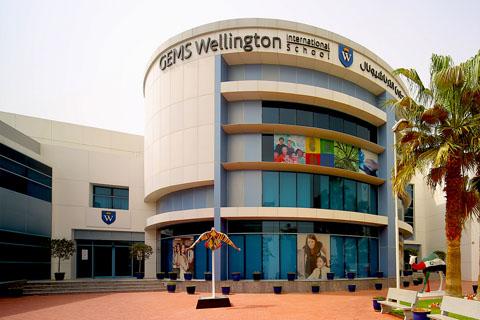
Gems Wellington International School (Al Sufouh 1)
Al Sufouh First, Dubai
Foundation Stage 1 (Nursery) to Year 13
46,000 to 101,500Yearly
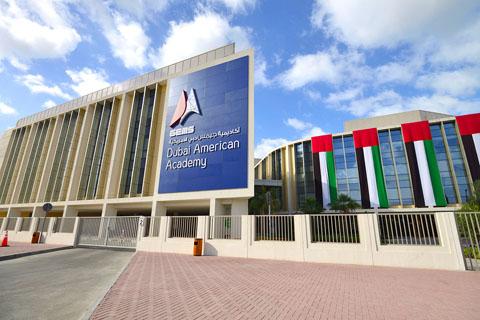
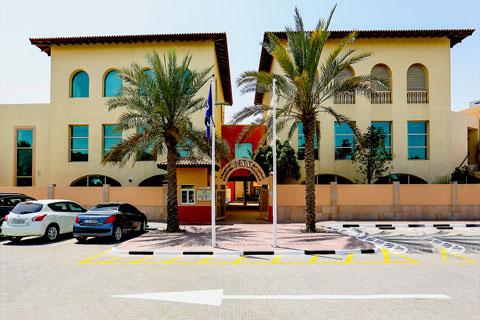
Jumeirah English Speaking School (Wadi Al Safa 6)
Wadi Al Safa 6, Dubai
PYP2 to DP2
48,000 to 101,000Yearly
Best value & affordable American schools in Dubai
American schools rated Good or above with starting fees under AED 45,000 a year.
American curriculum structure
Pre-K / Kindergarten
Ages 4-6
Foundation years, play-based early learning before formal grades begin.
Elementary School
Ages 6-11
Grades 1-5, building core literacy, numeracy and foundational skills.
Middle School
Ages 11-14
Grades 6-8, broadening subjects ahead of high school.
High School
Ages 14-18
Grades 9-12, with AP courses, SAT/ACT and the American High School Diploma.
About American schools in Dubai
The American curriculum is a popular choice in Dubai, particularly among North American expat families and UAE nationals who value its holistic, flexible approach to education. The 64 American schools in the city follow a K-12 structure, typically aligning instruction with the Common Core State Standards for English and mathematics, and the Next Generation Science Standards (NGSS) for sciences. Many schools also use the American Education Reaches Out (AERO) framework, which adapts US standards for international settings. Unlike the British system's emphasis on terminal exams, the American model evaluates students through continuous assessment, building a cumulative Grade Point Average (GPA). In high school, students can enrol in Advanced Placement (AP) courses, rigorous college-level classes with standardised end-of-year exams that can earn university credit. All American schools in Dubai also deliver mandatory Arabic language instruction, Islamic Studies for Muslim students and UAE Social Studies, as required by KHDA. The academic year runs from late August to mid-June.
Parents exploring American schools in Dubai will find a wide fee spectrum, from AED 9K to 141K a year. Schools at the lower end tend to be community-focused campuses serving diverse international populations, while higher-fee schools offer extensive facilities, smaller class sizes and a wider selection of AP courses. Fees generally increase from elementary through to high school, with the largest increase often occurring at Grade 9 as AP and college-prep programmes begin. KHDA regulates all private school fee increases in Dubai, requiring schools to seek approval before adjusting tuition. Beyond base tuition, families should budget for registration fees, textbook and technology charges, standardised testing fees (SAT, AP exams) and extracurricular activities. Compared to British schools in Dubai, American curriculum schools sit within a similar fee range, though the very top end of the British market tends to be higher. Indian schools in Dubai generally offer a more affordable fee structure.
KHDA inspects all private schools in Dubai annually, assigning ratings from Outstanding to Very Weak. Among Dubai's 64 American schools, 5 are rated Outstanding, with a further group rated Very Good, the largest share rated Good, and the remainder rated Acceptable or newly opened and awaiting their first inspection. The inspection framework assesses academic achievement, personal and social development, teaching quality, curriculum implementation, safeguarding and leadership effectiveness. Full inspection reports are available on the KHDA website and are an important tool for parents evaluating schools.
An American high school education in Dubai culminates in the American High School Diploma, reported through a cumulative GPA and supported by SAT or ACT scores. This profile fits the holistic admissions model of North American universities, which weigh coursework, activities, essays and references together rather than relying on final exams. A practical advantage is Advanced Placement, since strong AP results can convert into college credit and shorten the length and cost of a degree. The one thing families should check carefully is accreditation, because KHDA requires Dubai's American schools to be accredited by a recognised US body such as the New England Association of Schools and Colleges (NEASC), the Middle States Association (MSA) or Cognia for the diploma to hold full international value. Dubai graduates go on to universities across North America, Europe, the UAE and beyond.
Most American schools in Dubai open applications during the first term for the following academic year, though timelines vary, so it is worth contacting your shortlisted schools early. Key entry points include Pre-K/KG1 (age 4-5), Grade 1 (age 6) and Grade 6 (age 11, the start of middle school). Schools typically review previous transcripts, GPA records and MAP or standardised test results as part of the application. Required documents usually include passport copies, Emirates ID, visa copy, the last two years of school reports, a transfer certificate, immunisation records and photographs. The credit-based structure of the American system makes it one of the more flexible curricula to transfer into, provided the student meets KHDA's core requirements. Families moving from a British school should be aware that American Grade 6 roughly aligns with British Year 7, and a student's GPA will start fresh at the new school. Switching during high school requires careful alignment to ensure all graduation credit requirements are met. The UAE's new age cutoff of 31 December, effective from the 2026-27 academic year, applies to all American schools.
Comparing curriculums in the UAE
Compare the British, American, IB and Indian curriculums: fees, structure, exams and which pathway is right for your child.
Not sure where to start?
Answer a few quick questions and we'll email you a personalised shortlist of schools in Dubai.
Take the 2-minute quizFrequently asked questions
Annual fees range from AED 9K to 141K depending on the school's tier, facilities and grade level. Fees increase from elementary through high school, particularly once AP course offerings begin. KHDA regulates all fee increases across Dubai's private schools.
American schools assess students continuously throughout the year, combining classwork, assignments, projects and tests into a cumulative Grade Point Average (GPA). This differs from exam-focused curricula like the British system, where final IGCSE and A-Level results carry the greatest weight.
Advanced Placement (AP) courses are rigorous, college-level classes offered during high school. Students who pass the end-of-year AP exam can earn university credit. Many American schools in Dubai offer a selection of AP courses, though the range varies by school, with larger, well-resourced schools tending to offer wider AP selections.
KHDA requires all American schools in Dubai to hold active accreditation from a US-recognised agency such as NEASC, MSA or Cognia. This accreditation ensures the High School Diploma is recognised globally. You can verify a school's accreditation status on the KHDA website or directly with the accrediting body.
Children typically enter Pre-K at age 4 or KG1 at age 5. The UAE is introducing a new age cutoff date of 31 December from the 2026-27 academic year. Parents should check each school's specific age entry requirements.
Yes. The American system's credit-based structure makes it relatively flexible for incoming transfers. The main consideration is the grade equivalency, as British Year 7 aligns with American Grade 6, for example. Switching during high school requires checking that the student can meet the credit requirements for the American High School Diploma.
Yes, all private schools in Dubai are required by KHDA to teach Arabic. Islamic Studies is mandatory for Muslim students, and UAE Social Studies is required for all students. These subjects are integrated into the regular school timetable alongside the American curriculum.
Yes. The SAT and ACT are standardised tests used for university admissions, particularly in the US and Canada. Most American schools in Dubai serve as official testing centres and prepare students for these exams during high school.
Currently, 5 American schools hold KHDA's Outstanding rating, with a further group rated Very Good and the largest share rated Good. Full inspection reports for every school are published on the KHDA website.
You will generally need your child's passport copy, Emirates ID, visa copy, the last two years of school reports, a transfer certificate, immunisation records and passport-sized photographs. High school applicants may also need to provide GPA transcripts and standardised test scores.
To use the American High School Diploma at a UAE public university or for a government role, graduates obtain the Ministry of Education equivalency certificate, the muadala. Accreditation matters here too, as the ministry generally looks for a diploma from an accredited school supported by SAT results before granting equivalency. Many private and overseas universities admit students on the diploma and SAT directly.
Find more schools across the UAE
Other curriculums in Dubai
American schools in other cities
Are you an American school in Dubai?
Reach parents actively searching for American schools on Schoolsery.