Schools in Abu Dhabi
Abu Dhabi has 175+ private schools across 13 curriculums, regulated by the Abu Dhabi Department of Education and Knowledge (ADEK). Schoolsery helps you compare schools by ADEK rating, curriculum, fees and location.
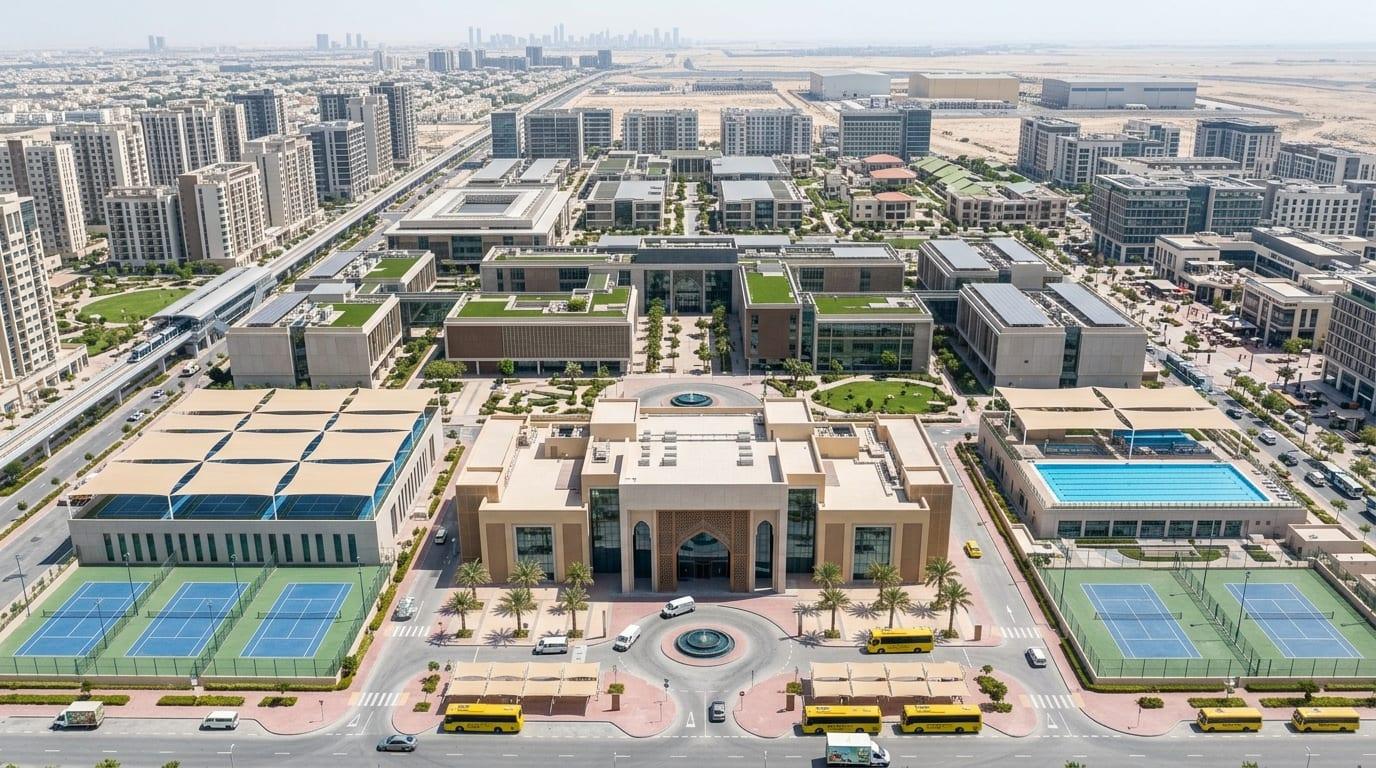
Top-rated schools in Abu Dhabi
The highest-rated private schools in Abu Dhabi based on their latest ADEK inspection.
The British International School
Madinat Zayed, Abu Dhabi
Foundation Stage 1 (Nursery) to Year 13
55,000 to 75,000Yearly
Repton Foundation School
Al Reem Island, Abu Dhabi
Foundation Stage 1 (Nursery) to Year 2
62,000 to 69,000Yearly
Best value & affordable schools in Abu Dhabi
Strong schools at lower fees, rated Good or above with starting tuition under AED 35,000 a year.
The Sheikh Zayed Private Academy For Girls
Al Manhal, Abu Dhabi
Pre-K to Grade 12
32,500 to 75,000Yearly
Merryland International School
Mohamed Bin Zayed City, Abu Dhabi
Foundation Stage 1 (Nursery) to Year 12
25,500 to 44,000Yearly
Al Rabeeh School
Hadbat Al Za'faranah, Abu Dhabi
Foundation Stage 1 (Nursery) to Year 7
28,000 to 34,000Yearly
Gems Winchester School (Al Danah)
Al Danah, Abu Dhabi
Foundation Stage 2 (Reception) to Year 9
19,500 to 26,500Yearly
Explore schools in Abu Dhabi by curriculum
American Curriculum
The most widely offered curriculum in the capital, following US Common Core standards with AP courses and a High School Diploma. Includes many government-funded charter schools run by operators like Aldar and Taaleem.
View schoolsBritish Curriculum
The second most popular curriculum in Abu Dhabi, following the National Curriculum of England to IGCSE and A-Levels, with long-established schools like The British School Al Khubairat and Brighton College.
View schoolsIndian Curriculum
CBSE and ICSE schools with a strong academic focus and the most affordable private option in Abu Dhabi, serving the capital's large Indian community.
View schoolsChoosing a school in Abu Dhabi
Abu Dhabi's private education sector is regulated by the Abu Dhabi Department of Education and Knowledge (ADEK), which oversees all private schools, nurseries and charter schools across the emirate, including Abu Dhabi city, Al Dhafra and Al Ain. With 175 private schools offering around 13 curriculums, the emirate provides a broad range of options. The American curriculum is the most widely offered, followed by British, the UAE Ministry of Education curriculum and Indian. Abu Dhabi also runs a distinctive charter school model, a public-private partnership where government-funded schools are managed by private operators like Aldar Education, Bloom Education and Taaleem following an American-based curriculum. Charter schools are free for UAE nationals and offer a third option alongside public and private schooling.
Private school fees in Abu Dhabi range from AED 4,000 to AED 103,500 a year. Indian curriculum schools are the most affordable, British and American schools span the middle and upper ranges, and IB schools sit near the top. Abu Dhabi's market is more affordable overall than Dubai's. ADEK regulates fee increases and requires schools to submit annual fee-adjustment requests, along with a mandatory parent-school contract setting out fees, policies and responsibilities. Beyond tuition, budget for registration, uniforms, transport and activities. Charter schools are free for UAE nationals.
ADEK inspects private schools using the Irtiqaa framework and assigns a performance rating from Outstanding to Weak, covering student achievement, teaching and learning, curriculum, leadership and the school's contribution to the community. 11 schools currently hold an Outstanding rating. ADEK also assigns a separate National Identity Mark, which evaluates how well schools integrate Emirati culture, values and global citizenship, rated independently of the academic Irtiqaa rating. Inspections take place every 18 to 24 months, with lower-performing schools inspected more frequently, and reports are published on the ADEK website.
Abu Dhabi's schools are spread across a large area, so location is one of the most important factors, with major clusters in Mohamed Bin Zayed City, Bani Yas and Khalifa City. Consider whether a charter school is an option, as these are free for UAE nationals and follow American-based curriculums run by operators like Aldar and Taaleem. For private schools, choose the curriculum that matches your family's long-term plans. The sector is expanding, with Harrow International School and Gordonstoun Abu Dhabi expected on Saadiyat Island in 2026. Visit schools in person and ask about class sizes, teacher retention and support for students moving between curriculums. For 2026-27, children must turn 3 by 31 December of the admission year to enter Pre-K/FS1.
Popular areas for schools in Abu Dhabi
Abu Dhabi's schools are concentrated in suburban communities, so location and commute time are key factors for families in the capital.
Mohamed Bin Zayed City
The largest school cluster in Abu Dhabi, a fast-growing suburban community with schools across every major curriculum and a mix of affordable and mid-range options, including several charter schools. Top schools include Belvedere British School and Abu Dhabi International Private School.
Bani Yas
One of Abu Dhabi's largest residential areas, offering everything from affordable Indian and MOE curriculum schools to mid-range British and American options, with several charter schools serving the local community.
Khalifa City
A major school hub near Abu Dhabi International Airport with a strong mix of British and American options, premium campuses and modern facilities. Top schools include Aldar Academies and ADNOC Schools.
Al Reem Island & Saadiyat Island
Abu Dhabi's premium island communities, home to some of the emirate's top-rated higher-fee British and IB schools catering to professionals near the city centre. Top schools include GEMS World Academy and Cranleigh Abu Dhabi.
Al Mushrif & Al Bateen
Central Abu Dhabi locations home to some of the emirate's most established schools, popular with long-term expat families and diplomats seeking premium British and IB options. Top schools include The British School Al Khubairat, Brighton College and International Community Schools.
Choosing a School in the UAE
Our complete parent guide: comparing curriculums, understanding inspection ratings and fees, admissions, school visits and more.
Not sure where to start?
Answer a few quick questions and we'll email you a personalised shortlist of schools in Abu Dhabi.
Take the 2-minute quizFrequently asked questions
Private school fees in Abu Dhabi range from AED 4,000 a year for Indian curriculum schools to AED 103,500 for premium British schools. American schools sit in the middle. Charter schools are free for UAE nationals. ADEK regulates fee increases, and all schools must provide a parent-school contract outlining fees and policies.
ADEK inspects schools using the Irtiqaa framework across five performance standards. Schools are rated from Outstanding to Weak, and 11 currently hold an Outstanding rating. ADEK also assigns a National Identity Mark that evaluates how well schools promote Arabic language and Emirati culture. Full inspection reports are published on the ADEK website.
Charter schools are a distinctive Abu Dhabi model: government-funded schools managed by private operators like Aldar Education, Bloom Education and Taaleem. They follow an American-based curriculum and are free for UAE nationals. Introduced by ADEK in 2018, they offer a third option between public and private schools.
From the 2026-27 academic year, children can enter Pre-K/FS1 if they turn 3 by 31 December of the admission year, a change from the previous 31 August cutoff. The new cutoff applies to all ADEK-regulated schools. Many families also enrol children in nursery from age 1 to 2 before formal schooling.
ADEK regulates schools in Abu Dhabi, Al Ain and Al Dhafra, while KHDA regulates schools in Dubai. Both use similar inspection frameworks and rating scales, but ADEK also oversees charter schools and assigns a separate National Identity Mark. Each regulator conducts its own inspections, so a rating in one emirate does not transfer to another.
Mohamed Bin Zayed City has the highest concentration, followed by Bani Yas and Khalifa City. Newer areas like Yas Island and Saadiyat Island are growing, with premium schools such as Cranleigh and the upcoming Harrow School. The central areas of Al Mushrif and Al Bateen have some of the emirate's most established schools.
You will need an Emirates ID for both the child and at least one parent, the child's passport, visa, birth certificate, and the last two years of school reports. ADEK requires all schools to implement an annual parent-school contract signed before enrolment. If transferring from another emirate, you will need an attested transfer certificate.
Most schools open admissions between October and February for the following September. Popular schools, especially Outstanding-rated British and IB schools, fill up fast, so apply 8 to 12 months in advance. For 2026-27, the new age cutoff is creating additional demand at certain entry points.
Yes. You will need a transfer certificate from the current school attested by KHDA, plus all standard enrolment documents. ADEK assesses grade equivalency based on the child's completed years and curriculum. If switching curriculums, the receiving school may place the child in a different year group.
Yes. Indian curriculum schools are the most affordable, with fees starting from AED 4,000 a year. Charter schools are free for UAE nationals, and MOE curriculum schools also tend to be more affordable. Abu Dhabi's market is more accessible overall than Dubai's.
Find more schools across the UAE
Are you a school in Abu Dhabi?
Reach parents actively searching for schools on Schoolsery.