Nurseries in Dubai
Dubai has 287+ licensed nurseries and early childhood centres, serving over 27,000 children. Regulated by KHDA for education and the Dubai Health Authority for health and safety, they accept children from 45 days old up to school age. Compare nurseries by learning approach, fees and location to find the right early years environment for your child.

Featured nurseries in Dubai
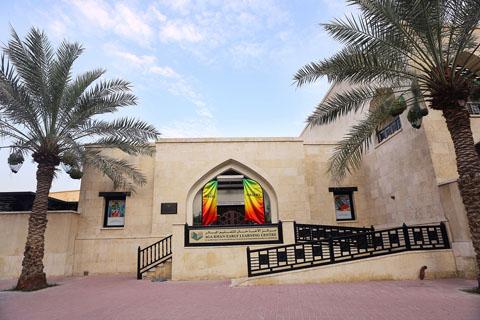
Aga Khan Early Learning Centre
Oud Metha, Dubai
Foundation Stage 1 (Nursery) to Foundation Stage 2 (Reception)
8,500 to 13,000Yearly

Al Dana Nursery
Nadd Al Hamar, Dubai
Foundation Stage 1 (Nursery) to Foundation Stage 2 (Reception)
20,000 to 30,000Yearly
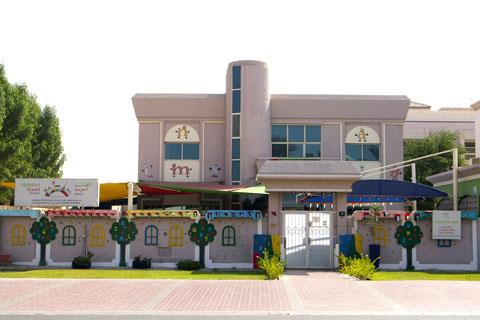
Alphabet Street Nursery
Al Manara, Dubai
Foundation Stage 1 (Nursery) to Foundation Stage 2 (Reception)
25,000 to 35,000Yearly
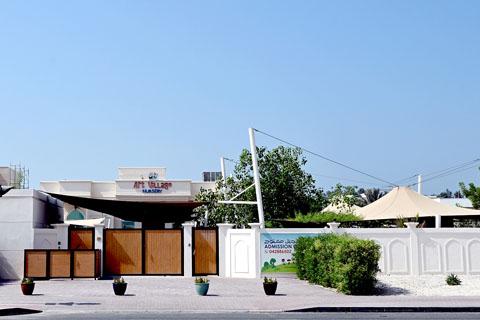
Art Village Nursery
Jumeirah Second, Dubai
Atelier 1 (Explorers) to Atelier 2 (Collaborators)
30,000 to 40,000Yearly
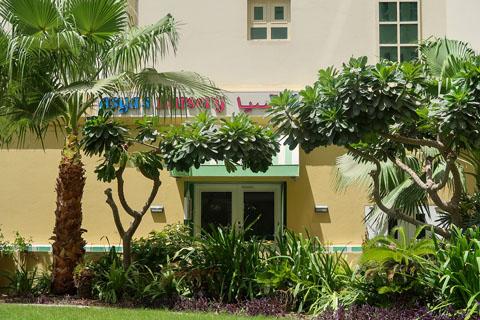
Asya'S Nursery
Palm Jumeirah, Dubai
Foundation Stage 1 (Nursery) to Foundation Stage 2 (Reception)
30,000 to 35,000Yearly
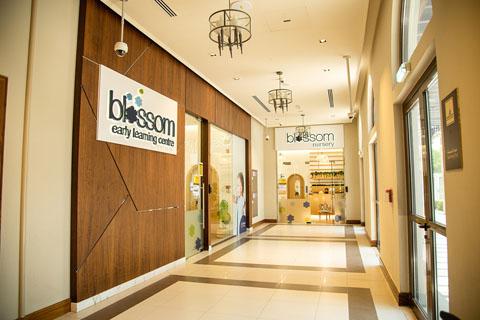
Blossom Arabian Ranches Early Learning Center
Wadi Al Safa 6, Dubai
Foundation Stage 1 (Nursery) to Foundation Stage 2 (Reception)
30,000 to 50,000Yearly

Blossom Arabian Ranches Early Learning Center 2
Wadi Al Safa 6, Dubai
Foundation Stage 1 (Nursery) to Foundation Stage 2 (Reception)
30,000 to 50,000Yearly

Blossom Carson Tower Early Learning Centre
Wadi Al Safa 6, Dubai
Foundation Stage 1 (Nursery) to Foundation Stage 2 (Reception)
30,000 to 50,000Yearly
Explore nurseries in Dubai by learning approach
EYFS
The Early Years Foundation Stage is the most widely used framework in Dubai. Play-based learning with structured developmental goals covering communication, physical development and personal growth.
View nurseriesMontessori
Child-led, self-directed learning using hands-on materials. Montessori classrooms encourage independence and sensorial exploration from an early age.
View nurseriesReggio Emilia
An inquiry-driven approach where the environment is considered the third teacher. It emphasises creativity, collaboration and child-led project work.
View nurseriesChoosing a nursery in Dubai
Dubai's 287 nurseries and early childhood centres are regulated by the Knowledge and Human Development Authority (KHDA) through its Regulations and Permits Commission. Nurseries accept children from 45 days old, aligning with the UAE's maternity leave provisions, up to four years of age. The sector serves over 27,000 children. The EYFS (Early Years Foundation Stage) is the dominant framework, offered across the vast majority of nurseries. Montessori and Reggio Emilia approaches are also widely available, particularly in the premium segment. KHDA does not mandate a single curriculum but requires nurseries to demonstrate fidelity to their chosen pedagogical framework. In late 2025, KHDA launched the Quality Framework for Early Childhood Care and Education, aligned with the Education 33 Strategy. This framework introduces the concept of the Dubai Child, promoting curricula that foster identity, language and cultural awareness within a global context.
Nursery fees in Dubai are market-driven and not directly regulated by KHDA, which means they vary significantly by location, learning approach and facilities. Accessible nurseries typically charge AED 12,000 to AED 25,000 per year, while premium nurseries in central locations range from AED 25,000 to AED 45,000. Ultra-premium nurseries in areas like Al Wasl, Jumeirah and Dubai Marina can exceed AED 50,000 per year. Fees are generally structured termly, across three terms per year, though monthly payment plans are increasingly common. Beyond tuition, parents should budget for non-refundable registration fees, medical fees (around AED 500 to 1,500), uniforms and materials. There are no direct government subsidies for private nursery fees, though some employers offer childcare allowances. Nursery fees often rival or exceed early primary school fees, due to the high overhead of the mandated low staff-to-child ratios.
Historically, Dubai nurseries did not receive published inspection ratings like K-12 schools. This changed in November 2025 with the launch of the Quality Framework for Early Childhood Care and Education. Aligned with the Dubai Education 33 Strategy, this framework establishes core quality standards and transitions the sector toward rigorous reflection and outcomes-based assessment. KHDA mandates staff-to-child ratios of 1:3 for children under one year, 1:5 for one to two years, 1:8 for two to three years and up to 1:10 for three to four years. The Dubai Health Authority requires nurseries to maintain an on-site clinic of at least nine square metres, staffed by a licensed nurse. Indoor space rules mandate a minimum of 3.5 square metres per child under two years and 3 square metres for older children.
Start by deciding which learning approach suits your child and family. EYFS provides a structured, play-based framework with clear developmental goals, Montessori emphasises independence and self-directed learning, and Reggio Emilia focuses on creativity and child-led exploration. Location is critical in Dubai, as a nursery near your home or workplace reduces daily commute stress for both parent and child. Visit nurseries in person and observe how staff interact with children, how transitions between activities are managed, and whether the environment feels warm and stimulating. Ask about staff qualifications, turnover rates and the staff-to-child ratio for your child's age group. For families planning ahead, check whether the nursery has feeder arrangements with specific schools, as some nursery chains maintain preferential admissions pipelines into larger school groups. Popular nurseries, particularly infant rooms where the 1:3 ratio limits capacity, often need registering up to a year in advance.
A typical nursery day in Dubai runs from around 7:00 or 8:00 AM to 6:00 PM, with most families choosing either a half-day, ending at noon, or a full-day option. The day usually follows a structured routine of free play, guided learning activities, outdoor time, meals and rest periods, though the balance between structure and free exploration depends on the learning approach. Many premium nurseries offer enrichment programmes within the fee or as add-ons, including swimming, music, ballet, sensory play and early coding. Communication between nursery and home is typically managed through dedicated apps where parents receive daily updates, photos, meal reports and developmental observations. Most nurseries follow a settling-in period for new children, usually one to two weeks of gradual, extended visits to help the child adjust. Meals may be provided by the nursery or brought from home depending on the operator, and nurseries with on-site kitchens typically follow DHA nutrition guidelines. It is also worth asking about the illness policy, including how quickly you are expected to collect a child who becomes unwell and what conditions require them to stay home.
EYFS, Montessori or Reggio?
Understand the main early years approaches and which one suits your child.
What to look for on a nursery visit
Know the signs of a great early years setting before you enrol your child.
Frequently asked questions
Fees range from around AED 12,000 per year for accessible nurseries to over AED 50,000 for ultra-premium options in areas like Jumeirah and Al Wasl. Most mid-range nurseries charge AED 20,000 to AED 35,000 per year. Fees are typically structured termly or annually, with monthly plans becoming more common. Additional costs include registration fees, medical fees and uniforms.
Most Dubai nurseries accept children from 45 days old, aligning with the UAE's maternity leave provisions. Children can stay until age 4 or 5, depending on the nursery. The developmental stages are broadly categorised as Babies (3 to 12 months), Toddlers (1 to 2 years), Preschoolers (2 to 3 years) and Foundation or FS1 (3 to 4 years).
EYFS (Early Years Foundation Stage) is a structured, play-based British framework with clear developmental goals, and it is the most widely used in Dubai. Montessori emphasises self-directed learning using hands-on materials, encouraging independence from an early age. Reggio Emilia is an inquiry-driven approach where the environment acts as the third teacher, focusing on creativity and child-led projects. Many Dubai nurseries blend elements from multiple approaches.
KHDA licenses and regulates all nurseries in Dubai. Historically, nurseries did not receive published inspection ratings like schools. In November 2025, KHDA launched a new Quality Framework for Early Childhood Care and Education that establishes core quality standards and moves toward outcomes-based assessment. KHDA also mandates strict staff-to-child ratios and health and safety requirements for all nurseries.
For popular nurseries, especially infant rooms with limited capacity due to the 1:3 staff ratio, registering up to a year in advance is recommended. Most nurseries accept rolling admissions throughout the year if spaces are available. Peak registration periods fall between January and April for a September start.
You will typically need the child's passport, UAE residence visa, Emirates ID, birth certificate and up-to-date vaccination records following the DHA immunisation schedule (including DTaP, Polio, Hib, Hepatitis B, MMR and PCV). Some nurseries also require copies of the parents' passports and Emirates IDs.
Some nursery chains maintain preferential admissions arrangements with larger school groups, giving their children a smoother route into a linked school. Check with the nursery directly about any school partnerships, as these can simplify the transition to formal schooling.
KHDA mandates minimum ratios of 1:3 for children under one year, 1:5 for one to two years, 1:8 for two to three years and up to 1:10 for three to four years. These ratios directly affect capacity, as infant rooms are the smallest and fill up fastest because of the 1:3 requirement.
Children typically transition to formal schooling (Pre-KG or FS1) at age 3, or to KG1/FS2 at age 4. From the 2026-27 academic year, the age cutoff has changed from 31 August to 31 December, so a child must reach the required age by 31 December of the admission year. A KHDA-attested leaving certificate from the nursery is required for the move.
Yes, many nurseries offer flexible scheduling including half-day (typically 8 AM to 12 PM), full-day (7 AM to 6 PM) and extended hours. Part-time schedules are usually available at reduced fees. Some nurseries also offer two-day or three-day weekly programmes for younger children who are gradually adjusting to group care.
Find more nurseries across the UAE
Are you a nursery in Dubai?
Reach parents actively searching and comparing nurseries on Schoolsery.