British Schools in Abu Dhabi
Abu Dhabi has 45+ British curriculum schools, spanning heritage institutions with decades of history to modern academy-style campuses. Regulated by the Abu Dhabi Department of Education and Knowledge (ADEK), these schools follow the English National Curriculum through to IGCSE and A-Level qualifications.
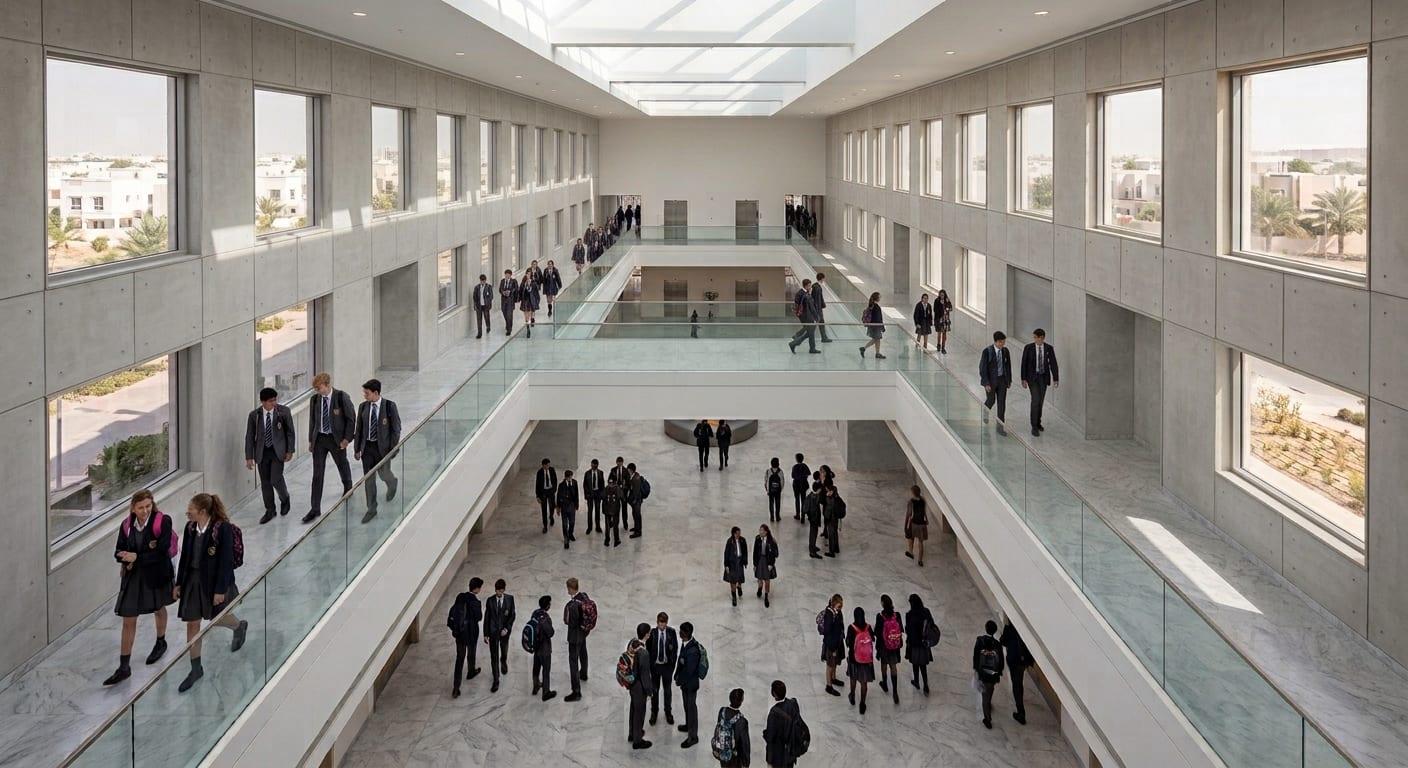
Top-rated British schools in Abu Dhabi
The highest-rated British curriculum schools in Abu Dhabi based on their latest ADEK inspection.
Repton Foundation School
Al Reem Island, Abu Dhabi
Foundation Stage 1 (Nursery) to Year 2
62,000 to 69,000Yearly
Merryland International School
Mohamed Bin Zayed City, Abu Dhabi
Foundation Stage 1 (Nursery) to Year 12
25,500 to 44,000Yearly
The British International School
Madinat Zayed, Abu Dhabi
Foundation Stage 1 (Nursery) to Year 13
55,000 to 75,000Yearly
Best value & affordable British schools in Abu Dhabi
British schools rated Good or above with starting fees under AED 45,000 a year.

Emirates Private School (Al Sa'Adah)
Al Sa'adah, Abu Dhabi
Foundation Stage 2 (Reception), KG1 to Year 12, Grade 12
10,000 to 23,000Yearly
International Community Schools (Al Danah)
Al Danah, Abu Dhabi
Foundation Stage 1 (Nursery) to Year 13
10,500 to 58,000Yearly
Al Najah Private School
Mohamed Bin Zayed City, Abu Dhabi
Foundation Stage 1 (Nursery), PYP 1 to Year 12, DP2
15,000 to 32,500Yearly

Al Nahda National School For Girls
Al Mushrif, Abu Dhabi
Foundation Stage 1 (Nursery) to Year 12
15,500 to 30,000Yearly
British curriculum structure
EYFS
Ages 3-5
Foundation Stage, play-based learning across seven areas of development.
Key Stage 1
Ages 5-7
Years 1-2, building core literacy and numeracy.
Key Stage 2
Ages 7-11
Years 3-6, the upper primary phase.
Secondary (KS3 to A-Level)
Ages 11-18
Years 7-13, covering Key Stage 3, IGCSE examinations, and A-Level or BTEC university preparation.
About British schools in Abu Dhabi
Abu Dhabi's 45 British schools serve a diverse community of British expats, other European nationals and Emirati families who value the structured, exam-focused pathway that the English National Curriculum provides. The sector includes some of the oldest and most established international schools in the UAE capital, alongside more recently opened campuses run by large academy groups. Schools follow the standard EYFS to Key Stage 5 progression, with students sitting IGCSE examinations at the end of Year 11 and A-Levels at the end of Year 13. All British schools in Abu Dhabi integrate mandatory Arabic language instruction, Islamic Studies for Muslim students and UAE Social Studies as required by ADEK. The city's British school community benefits from a well-established ecosystem of teachers, resources and extracurricular programmes, providing families with a high degree of choice across different price points and locations.
The British schools in Abu Dhabi cover a broad fee spectrum, from AED 7K to 104K a year. This spread accommodates families across various budgets, from affordable community schools to well-resourced campuses with extensive facilities. Fees typically increase as students move through the key stages, with the most significant rises occurring at the IGCSE and A-Level years due to smaller class sizes and specialist subject teaching. ADEK regulates fee structures for all private schools in Abu Dhabi, and schools must receive approval before adjusting tuition. Parents should also budget for registration fees, uniform costs, exam board fees for IGCSEs and A-Levels, and any charges for transport and extracurricular activities. Compared to American schools in Abu Dhabi, British curriculum schools tend to sit across a similar mid-to-upper fee range, while Indian schools in the city offer fees at a considerably lower level.
ADEK inspects private schools in Abu Dhabi and assigns performance ratings from Outstanding to Weak. Among the emirate's 45 British schools, 7 are rated Outstanding, with a further group rated Very Good or Good and a smaller number newly established or awaiting their first full inspection cycle. The ADEK inspection framework evaluates student attainment and progress, teaching quality, curriculum delivery, personal development, leadership and governance. Full inspection reports are published on the ADEK website, providing parents with detailed insight into each school's strengths and development areas.
An Abu Dhabi British education leads to IGCSE and A-Level qualifications that carry the same global recognition as those taken in the UK. Many of the capital's schools are long-established and hold British Schools Overseas (BSO) accreditation, an additional UK benchmark that sits alongside their ADEK rating and reassures families about standards. A-Levels reward depth, with students concentrating on three or four subjects, which suits clear pathways into fields such as medicine, engineering and law and is recognised by UK universities including the Russell Group. Graduates apply successfully across Europe, North America and Australia, and Abu Dhabi's own higher-education sector, which includes institutions such as Khalifa University and NYU Abu Dhabi, gives students strong options without leaving the emirate. US applications generally require the SAT or ACT alongside A-Level grades, and some schools also offer BTEC vocational routes.
For the most sought-after British schools in Abu Dhabi, starting your application early is essential, as many open admissions 12 months or more before the September start date, and heritage schools rated Outstanding or Very Good frequently maintain waitlists. Most families apply at one of three points: FS1 at age 3 to 4, Year 1 at 5 to 6, or Year 7 at the start of secondary. Entrance assessments, typically cognitive ability tests, are standard from Year 7 onwards. You will need passport and Emirates ID copies, visa copy, two years of school reports, a transfer certificate from the current school, vaccination records and recent photographs. Families transferring from an American school should note that grade-to-year-group equivalencies differ, with American Grade 6 aligning with British Year 7. Transfers during Year 10 or Year 12 are challenging because IGCSE and A-Level syllabi run as two-year courses. Transfers within the British system from schools in other emirates are typically straightforward. A new UAE-wide age cutoff of 31 December takes effect from the 2026-27 academic year and applies to all entry levels.
Comparing curriculums in the UAE
Compare the British, American, IB and Indian curriculums: fees, structure, exams and which pathway is right for your child.
Not sure where to start?
Answer a few quick questions and we'll email you a personalised shortlist of schools in Abu Dhabi.
Take the 2-minute quizFrequently asked questions
Fees range from AED 7K to 104K a year. The range reflects everything from community schools to long-established heritage campuses. Fees increase at the IGCSE and A-Level stages. ADEK regulates all private school fee adjustments.
7 British schools hold ADEK's Outstanding rating, with more rated Very Good. ADEK publishes full inspection reports for every private school on its website.
Children typically enter Foundation Stage 1 (FS1) at age 3-4. The UAE is introducing a new age cutoff of 31 December from the 2026-27 academic year, which will apply to all entry levels.
Students sit IGCSE exams at the end of Year 11 and A-Levels at the end of Year 13. Exam boards include Pearson Edexcel, Cambridge International and AQA. Some schools also offer BTEC vocational qualifications.
Yes, transfers are most straightforward during primary years. The main consideration is grade-to-year-group alignment, as American Grade 6 corresponds to British Year 7. Switching during IGCSE or A-Level years is more complex due to the two-year exam structure.
Yes. A-Levels taken in Abu Dhabi are moderated by the same exam boards and held to the same standards as those in the UK. They are fully recognised by Russell Group universities and institutions worldwide.
ADEK inspects every private school in Abu Dhabi and evaluates student achievement, teaching quality, personal development, curriculum and leadership. Schools receive an overall rating from Outstanding to Weak. Reports are published publicly.
Yes. All private schools in Abu Dhabi must teach Arabic. Islamic Studies is mandatory for Muslim students, and UAE Social Studies is required for all students, integrated alongside the English National Curriculum.
Most schools open admissions around 12 months before the September start. Heritage schools with Outstanding ratings often maintain waitlists, so early application is advisable, especially for FS1 and Year 7 entry.
The standard checklist includes your child's passport and Emirates ID copies, visa, the last two years of reports, a transfer certificate, immunisation records and photographs. Some schools also ask for a medical form or proof of address.
It is the muadala, the certificate that converts A-Level results into the local secondary-certificate equivalent required for UAE public universities and federal government posts. The ministry sets out how many IGCSE and A-Level subjects must be presented, and applications are made through its equivalency service once results are issued. Private and overseas universities generally accept A-Levels without it.
Find more schools across the UAE
Other curriculums in Abu Dhabi
British schools in other cities
Are you a British school in Abu Dhabi?
Reach parents actively searching for British schools on Schoolsery.