IB Schools in Dubai
Dubai has 25+ schools offering International Baccalaureate programmes, from the Primary Years Programme through to the IB Diploma. Regulated by the Knowledge and Human Development Authority (KHDA), these authorised IB World Schools follow an inquiry-based, interdisciplinary approach to learning.
Top-rated IB schools in Dubai
The highest-rated IB World Schools in Dubai based on their latest KHDA inspection.
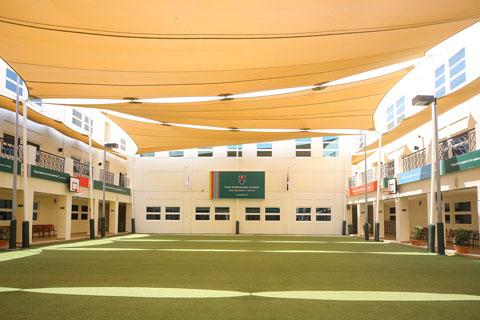
Dubai International Academy (Emirates Hills)
Al Thanyah Fifth, Dubai
PYP2 to DP2
43,500 to 78,000Yearly
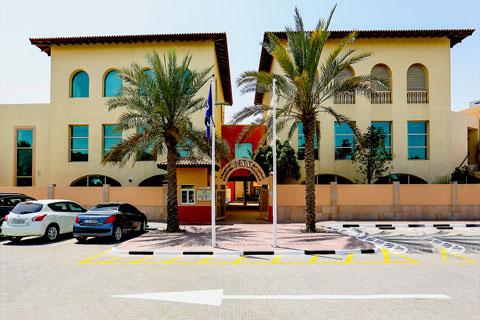
Jumeirah English Speaking School (Wadi Al Safa 6)
Wadi Al Safa 6, Dubai
PYP2 to DP2
48,000 to 101,000Yearly
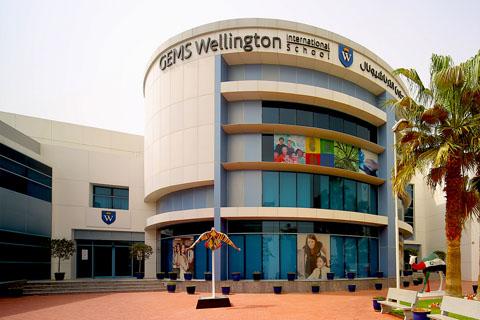
Gems Wellington International School (Al Sufouh 1)
Al Sufouh First, Dubai
Foundation Stage 1 (Nursery) to Year 13
46,000 to 101,500Yearly
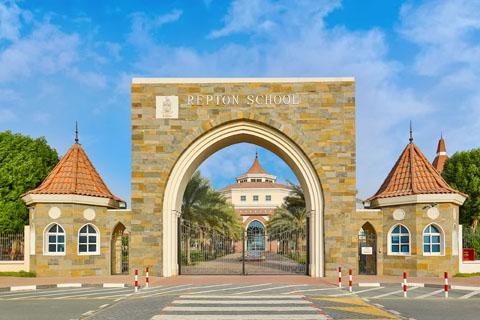
Repton School
Nad Al Sheba Third, Dubai
Foundation Stage 1 (Nursery) to Year 13
55,500 to 100,500Yearly
Best value IB schools in Dubai
IB World Schools rated Good or above with starting fees under AED 60,000 a year.
IB curriculum structure
PYP
Ages 3-12
Primary Years Programme, an inquiry-based approach across the early and primary years.
MYP
Ages 11-16
Middle Years Programme, connecting subjects through real-world context.
DP
Ages 16-19
Diploma Programme, six subjects plus Theory of Knowledge, the Extended Essay and CAS, scored out of 45 points.
About IB schools in Dubai
The International Baccalaureate is offered by 25 schools in Dubai, including both pure IB continuum schools that deliver PYP, MYP and DP as a seamless pathway, and hybrid models where students may follow a British curriculum through the secondary years before transitioning to the IB Diploma in Year 12. Every school offering IB programmes must be formally authorised by the International Baccalaureate Organization (IBO), which sets rigorous standards for curriculum delivery, teacher qualifications and assessment practices. The IB approach is fundamentally inquiry-based, encouraging students to ask questions, conduct research and make connections across disciplines rather than studying subjects in isolation. All IB schools in Dubai integrate mandatory Arabic language instruction, Islamic Studies for Muslim students and UAE Social Studies alongside the IB framework, as required by KHDA. Dubai is one of the strongest IB markets globally.
IB schools in Dubai command fees ranging from AED 9K to 141K a year. The wide range reflects the diversity of the sector, from schools offering only specific IB programmes alongside another curriculum to fully dedicated continuum schools with extensive facilities. The Diploma Programme years (equivalent to Grades 11-12) tend to be the most expensive, driven by the need for specialist teachers, low student-to-teacher ratios and the resource-intensive nature of components like the Extended Essay and internal assessments. KHDA regulates all private school fee increases in Dubai. When budgeting, families should also consider IB examination fees (charged per subject and paid directly to the IBO), registration fees and costs for CAS activities. IB schools generally sit at the higher end of the fee spectrum in Dubai, typically above British and American schools, and significantly above Indian schools.
IB schools in Dubai perform strongly in KHDA inspections, reflecting the rigorous authorisation and quality standards enforced by the IBO. Of the 25 IB schools, 4 are rated Outstanding, with a large group rated Very Good and the remainder rated Good or Acceptable. A high proportion of IB schools in Dubai hold one of the top two KHDA ratings, one of the strongest performances across all curriculum groups. Full inspection reports are available on the KHDA website.
The IB Diploma is widely regarded as one of the most competitive school-leaving qualifications for university admissions worldwide. The programme's combination of breadth (six subjects across different disciplines), depth (Higher Level subjects) and independent research (the Extended Essay) closely mirrors the academic expectations of undergraduate study. Top-tier universities, including Ivy League institutions, Russell Group universities in the UK and leading European and Asian universities, recognise the IB Diploma highly. Many universities offer advanced standing or course credit for strong IB scores, particularly at Higher Level. The maximum IB Diploma score is 45 points, comprising up to 42 points from six subjects and 3 bonus points from Theory of Knowledge (TOK) and the Extended Essay. The Career-related Programme (CP) is also available at some Dubai schools, combining IB coursework with vocational pathways for students interested in applied learning.
IB schools in Dubai tend to be among the most competitive to get into, as many open applications 12 to 18 months in advance and the most popular schools maintain significant waitlists. Key entry points are PYP1 (age 3-4), the start of MYP (age 11-12) and the start of the Diploma Programme (age 16-17). Admissions assessments often evaluate not only academic ability but also student motivation, critical thinking and English language proficiency, as the DP's heavy research and writing demands make these qualities essential. Required documents usually include passport copies, Emirates ID, visa copy, previous school reports, a transfer certificate and immunisation records. Families considering a move from a British or American school into the IB Diploma should be aware that the transition can require adjustment, particularly for students coming from curriculums that focus on fewer subjects in greater depth. The Extended Essay and Theory of Knowledge components are unique to the IB and require independent research skills that may be unfamiliar. Planning the transition at the start of the DP rather than mid-course is strongly recommended. The UAE's 31 December age cutoff for 2026-27 applies to all IB schools.
Comparing curriculums in the UAE
Compare the British, American, IB and Indian curriculums: fees, structure, exams and which pathway is right for your child.
Not sure where to start?
Answer a few quick questions and we'll email you a personalised shortlist of schools in Dubai.
Take the 2-minute quizFrequently asked questions
Annual fees range from AED 9K to 141K. Dedicated continuum schools and the Diploma Programme years tend to sit at the higher end due to specialist staffing and low student-to-teacher ratios. KHDA regulates all fee increases for private schools in Dubai.
The IB Diploma Programme (DP) is a two-year course for students aged 16-19. Students study six subjects (three at Higher Level, three at Standard Level), complete an Extended Essay, take Theory of Knowledge, and participate in CAS activities. The maximum score is 45 points, 42 from subject grades and 3 bonus points from TOK and the Extended Essay.
UAE IB students consistently perform above the global average. While the most recent worldwide average was 30.58 points, school averages across Dubai routinely range between 32 and 36 points.
Yes. The IB Diploma is one of the most widely accepted school-leaving qualifications globally. It is recognised by Ivy League and Russell Group universities, as well as leading institutions across Europe, Asia and the UAE. Many universities offer advanced standing or credit for strong IB scores.
A full IB continuum school offers PYP, MYP and DP as a connected pathway from early years through to graduation. A hybrid school may deliver another curriculum (often British) through the secondary years and offer the IB Diploma as an alternative to A-Levels in Years 12-13.
Yes, though the transition requires preparation. The IB DP requires students to study six subjects across different disciplines, which contrasts with the A-Level model of specialising in three or four subjects. Students will also need to adapt to the Extended Essay and Theory of Knowledge components. Starting at the beginning of the DP programme is strongly recommended.
4 IB schools hold KHDA's Outstanding rating, with a further group rated Very Good. A high proportion of IB schools in Dubai sit in the top two rating categories, one of the strongest proportions across all curriculum groups in the city.
Children can enter PYP1 at age 3-4. The MYP typically begins at age 11, and the Diploma Programme at age 16. The UAE's new age cutoff of 31 December, effective from 2026-27, will apply to all IB schools.
You will typically need passport copies, Emirates ID, visa copy, previous school reports (last two years), a transfer certificate, immunisation records and photographs. Some IB schools also conduct admissions interviews to assess student readiness, particularly for DP entry.
The CP combines IB coursework with vocational qualifications and a career-related study. It is designed for students who want to pursue applied or professional pathways rather than the traditional academic Diploma route. Not all IB schools in Dubai offer the CP, so parents should check availability at individual schools.
The IB Diploma is widely recognised, but for a place at a UAE public university or a government position graduates still obtain the Ministry of Education equivalency certificate, the muadala, which equates the Diploma to the national secondary certificate. Most international and private universities in the UAE and abroad accept the IB Diploma directly.
Find more schools across the UAE
Other curriculums in Dubai
Are you an IB school in Dubai?
Reach parents actively searching for IB schools on Schoolsery.