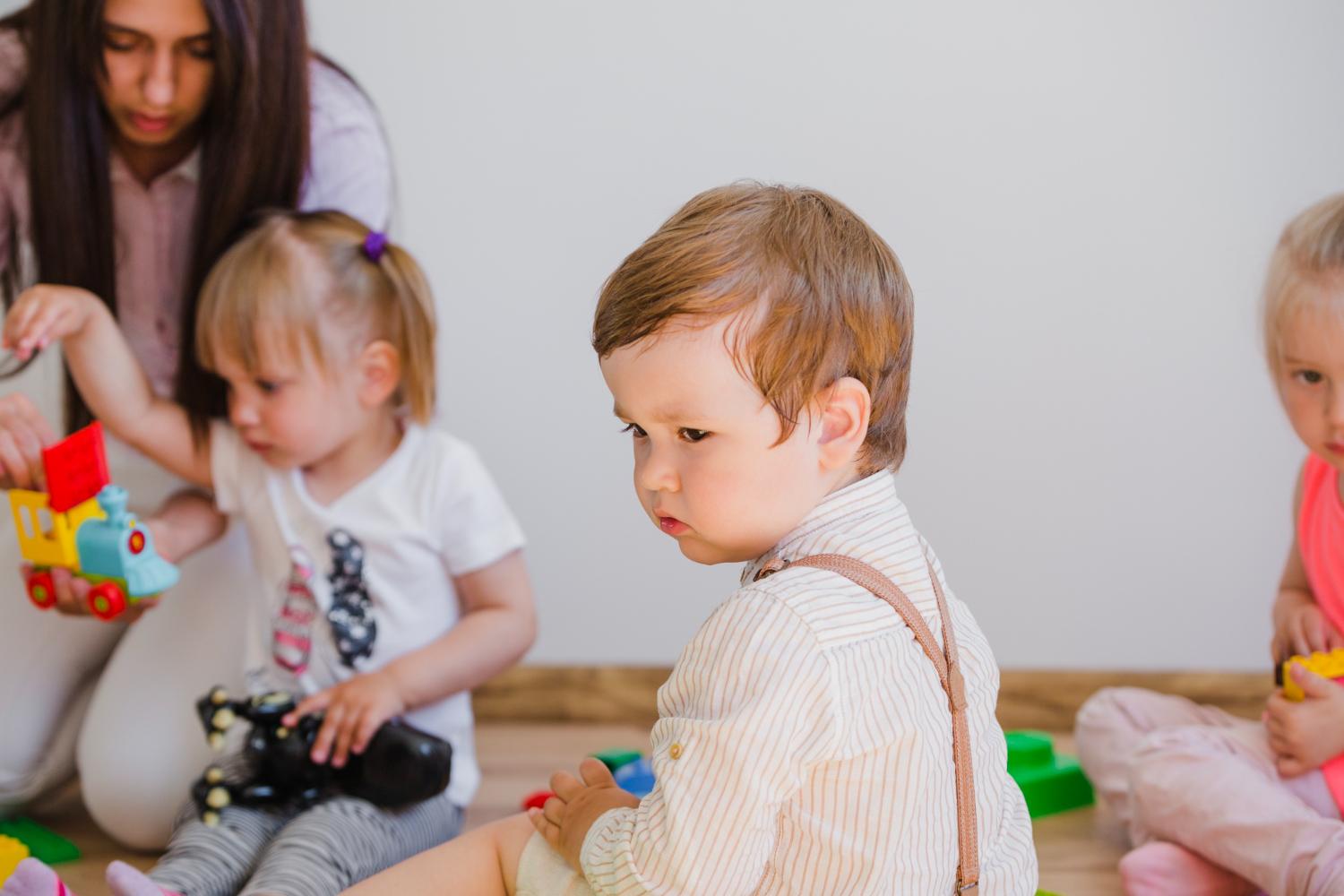
Social interaction is highly essential in a toddler’s development as it affects the manner in which their emotional, cognitive as well as interpersonal development takes place. When children are between the ages of 1 and 3, they learn how to interact with other children and these form the basis of their social interaction with other people.
Let’s take a look at the significance of socialisation, play dates and safety guidelines.
Importance of Social Interaction
The element under discussion represents the fact that children simply are not born knowing how social relations function; they acquire this knowledge gradually. Social interaction is vital for several reasons. The following are some of the most significant ones.
Emotional Development
During the social interactions, the toddlers get to learn on how to express and or control their emotions. Stimulated by peer interaction, they learn to enjoy themselves and to know how to feel angry, frustrated or whatever feeling comes within the socially acceptable channel. As social beings, toddlers also start to gain an understanding of compassion, that is, an ability to look at the feelings of friends.
Language Skills
Interpersonal communication is an important parameter of social relationships. Early childhood social interactions can be characterized in terms of linguistic socialization: During interactions with peers and with other adults, toddlers hear new words and new ways of putting words together. Such exposure also increases enhanced status in relation to verbal communication, that is, the capacity to articulate needs and provide information, and discourse. Social interaction helps toddler practice listening as well as speaking and that is good for their future academic learning.
Cognitive Development
Social relations act as an enabler for the general cognitive development since toddlers are forced to solve problems. Children whenever they are in groups they are bound to experience conflicts which develop skills in problem solving and decision making. They also enable the toddlers to learn how they relate with others and develop an aptitude of seeing things from other angles.
Building Confidence
Playing with peers assists toddlers to gain confidence and be proud of themselves. While they are at play and making friends, they feel as if they belong and are accepted. Other positive inter- personal relations would enhance their self- esteem in social- relations hence would develop into future healthy social- relations.
Organizing Playdates with Other Toddlers
Instead of playing solo, a toddler should be encouraged to engage in play with other toddlers so that this can be done as one of the following ways to organize playdates with other toddlers. The use of playdates is generally good for toddlers as it gets them to mix with other children of their age. Here are some tips for organizing successful playdates for your toddler.
Choose the Right Setting
Choose a good and safe terrain which you feel is appropriate for the playdate including your home or a park. Forbidding that the environment has any dangerous items within reach of the toddlers for them to move and play around with when necessary.
Keep it Small
Remember to, on average, address and play with each child in the playdate to avoid a large number of kids overwhelming the few caregivers present. It means that when a group is small, a toddler gets to interact more effectively and it reduces the chances of overloading him.
Plan Engaging Activities
Ensure that you have a number of appropriate activities that will foster interaction by children of the age group that you are targeting. Singing, playing, painting, and making crafts as well as outdoor activities may foster cooperation and forgetting of speech. For instance, if a teacher should arrange a sandbox or a water play station, children will have the possibility to share things and cooperate all day long.
Be Present
During play dates, the parent plays a crucial role as they must always be around to oversee the play date. Encourage the children to interact with each other and encourage them when they have trouble managing their differences. It also ensures the playdate is hitch-free and enjoying the company of a child gives one a usual child nature which helps in setting a positive tone.
Safe and Fun Group Activities
Apart from playdates, there are many activities that children of tender ages get engaged in hence enabling them to interact socially. Here are some safe and enjoyable options.
Storytime Sessions
This makes arranging a storytime session at home or even a local center as a fun session during which toddlers can have fun and interact with other toddlers. Select books that are likely to get the child engaged. For instance, those books that have familiar phrases or those that have tapes of sounds. In addition to reading, engage students in a discussion about the story so as to improve on their language usage and understanding.
Music and Movement Classes
Take your toddler for music and movement where they can sing, dance and play musical instruments with the other children. These classes make children engage in some level of physical activity whilst at the same time, building relationships. They know how to obey such directions, share the instruments, and collaborate in entertaining activities with other kids.
Group Art Projects
Schedule large group projects in which the toddler needs to work with his peers, for instance, painting a mural or creating a large construction with use of paints, pencils, and scissors, etc. It also makes the toddlers work in groups and also helps them learn from each other.
Outdoor Playgroups
Use parks that are available within one’s neighbourhood to conduct outdoor playdates. That is why they should create a PlayStation with balls for active infants and climbing structures as well as sandbox areas. Outdoor environments are therefore very rich in elements that can be manipulated by the toddlers as they play to support social interaction and acquire gross motor skills.
Social interaction is crucial in the development of a toddler since it helps in the emotional, cognitive as well as social development of that toddler. In more detail, parents should focus on the necessity of social contact, arrange the plays with friends and other children, and attend home meetings or other functions, which are safe and do not cause any risks for children. By mastering process skills in human relations and in mastering the words and actions used in interpersonal communication.