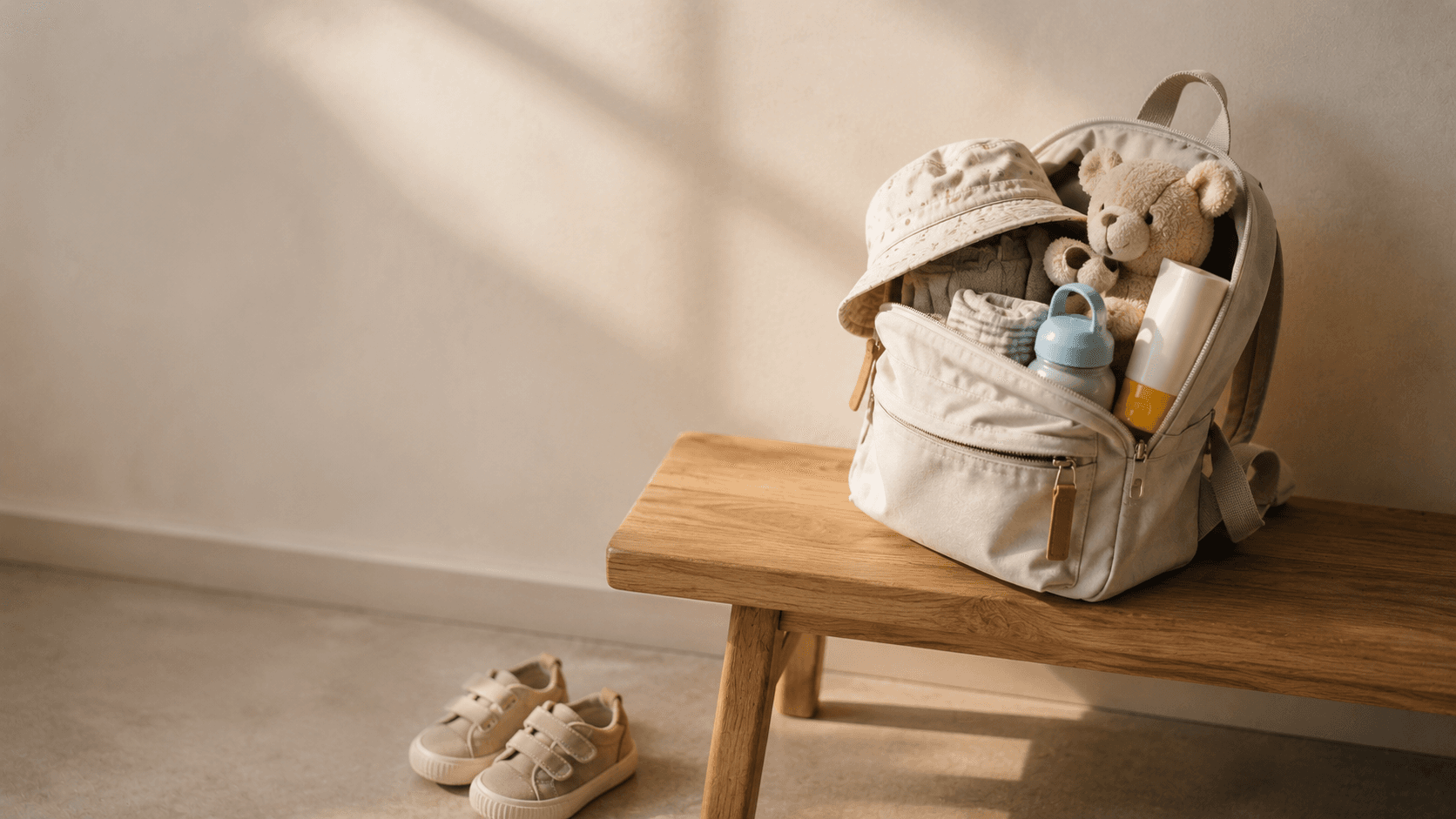
"Is my child ready for nursery?" It is one of the most common questions parents ask, and one of the most anxiety-inducing, because it feels like there should be a clear yes or no answer. The truth is that readiness is not a single milestone to reach. It is a combination of developmental indicators, and it looks different at every age. A 3-month-old baby is "ready" for something very different from what a 3-year-old is ready for. This nursery readiness checklist for UAE parents covers developmental milestones by age, busts common myths (especially around toilet training), tells you exactly what to pack, and explains how good nurseries support children who need more time.
Readiness Indicators by Age
Nursery readiness is not about whether your child can do everything on a list. It is about whether they are at a developmental stage where quality nursery care can support and enhance their development. Here is what to look for at each age.
3 Months
At this age, readiness is about basic physical development and responsiveness:
- Holds head steady when supported
- Responds to sounds (turns toward voices, startles at loud noises)
- Shows social smiling: smiling in response to your face or voice
- Tracks objects with eyes
- Is beginning to establish a feeding and sleeping pattern
A 3-month-old is "ready" for nursery in the sense that they can benefit from responsive, consistent care from a trained caregiver. They are not ready for educational activities: they need warmth, feeding, sleep, and sensory engagement.
6 Months
- Sits with support (and may be starting to sit independently)
- Babbles: making vowel sounds, beginning to combine consonants
- Reaches for and grasps objects
- Recognises familiar faces and may show stranger awareness
- Beginning to understand cause and effect (shaking a rattle makes a sound)
At this age, babies benefit from sensory-rich environments, gentle social interaction with other babies, and consistent routines. A nursery with a dedicated baby room and a 1:3 ratio can provide this well.
1 Year
- Walking or cruising (holding onto furniture while moving)
- First words (typically 1 to 3 words beyond "mama" and "dada")
- Developing separation awareness: understanding that you exist even when you are not visible
- Points to things of interest
- Responds to simple requests ("Give me the cup")
This is a common age to start nursery. Your child is mobile, curious, and increasingly social. Separation anxiety is likely, and that is a sign of healthy attachment, not a sign they are "not ready." For tips on managing this, see our guide on settling your child into nursery.
18 Months
- Walking independently and beginning to run
- Vocabulary expanding rapidly (typically 10 to 50 words)
- Engaging in parallel play (playing alongside other children, not yet cooperatively with them)
- Can follow simple one-step instructions
- Beginning to show preferences and make choices
At 18 months, children benefit enormously from the social and learning opportunities nursery provides. They are at a stage where interaction with peers accelerates language and social development.
2 Years
- Running confidently, beginning to climb
- Combining two words ("more milk," "big truck")
- Engaging in imaginative play (pretending to cook, caring for a doll)
- Showing awareness of toileting (may tell you when they need a nappy change)
- Increasing independence: wanting to do things "by myself"
This is one of the most popular ages to start nursery in the UAE, and most children adapt well.
3 Years
- Speaking in full sentences (3 to 5 words)
- Engaging in cooperative play with other children (taking turns, sharing, playing games together)
- Following 2 to 3 step instructions
- Growing independence in self-care (can attempt to dress, use cutlery, manage the toilet with help)
- Asking questions constantly (the "why?" phase)
A 3-year-old is typically very ready for nursery and may actively want the social interaction it provides.
The Toilet Training Myth
One of the most persistent myths about nursery readiness is that your child must be toilet trained before starting. This is not true.
Federal Decree-Law 51 defines children from one day old, so nurseries must be equipped to care for children in nappies. In practice, the vast majority of UAE nurseries accept children in nappies at all ages. Some nurseries support toilet training as part of their programme, but it is not a requirement for enrolment or for school readiness.
If a nursery tells you that your child cannot attend unless they are toilet trained, question this policy. It may not align with the legal framework, and it certainly does not align with child development research: children develop bladder and bowel control on their own timeline, typically between 18 months and 3 years, with significant variation.
The bottom line: do not rush toilet training to meet a nursery deadline. And do not feel embarrassed about your child being in nappies. The nursery staff change dozens of nappies every day: it is a completely normal part of their role.
What to Pack for Nursery (UAE-Specific)
Every nursery provides its own list, but here are the essentials with UAE-specific additions:
The Basics
- Nappies, wipes, and nappy cream: labelled with your child's name
- Two complete changes of clothes: accidents, spills, and messy play happen daily
- Bottles and formula (if needed): clearly labelled with feeding instructions
- Water bottle: labelled, refillable
- Spare shoes: for indoor/outdoor transitions
UAE-Specific Essentials
Sun hat: this is critical, not optional. The UAE sun is intense year-round, and outdoor play time exposes children to significant UV radiation. Choose a hat with a wide brim and neck flap.
Sunscreen SPF 30+: apply before drop-off and pack an extra tube for the nursery to reapply. Research shows that 25% of a person's lifetime sun exposure occurs before age 10, making early sun protection habits essential. Babies under 6 months should be kept out of direct sunlight entirely.
Additional Items
- A comfort item: a small blanket, soft toy, or family photo for the settling-in period
- Medication (if any): with clear written instructions including dosage, timing, and your signature. The nursery should have a medication administration policy.
Everything must be labelled. Everything. Label clothes, shoes, hats, bottles, lunch boxes, bags: everything that enters the nursery with your child's name on it. Nurseries care for many children, and unlabelled items get lost or mixed up.
UAE Climate Considerations
The UAE climate creates specific considerations for nursery-age children:
Summer temperatures exceed 45 degrees Celsius. Most nurseries limit outdoor play to early morning and late afternoon during summer months, typically avoiding the 10:00 AM to 3:00 PM window.
UV radiation is extremely strong year-round, not just in summer. Sun protection is needed every day, not just on hot days.
Air quality can be poor during sandstorm periods. Quality nurseries monitor daily temperature, humidity, and air quality, and adjust outdoor schedules accordingly.
Hydration is crucial. Ensure your child's nursery provides regular water breaks and encourages fluid intake throughout the day, especially in warmer months.
How Nurseries Support Children Who Are Not "Ready"
Here is a reassuring truth: the concept of a child being "not ready" for nursery is often about parent anxiety rather than child development. Good nurseries are designed to meet children exactly where they are.
Individual settling plans. A quality nursery will adapt the settling-in schedule to your child, extending sessions or adding extra parent-present days if needed.
Key worker systems. Your child will be assigned a key worker: a specific staff member responsible for their primary care and development tracking. This consistency helps children who need more time to build trust.
Flexible attendance. Many nurseries offer part-time options (two or three days, half days) that allow children to ease into nursery life gradually. For timing guidance, see our guide on when to enrol your child in nursery.
Communication with parents. During the settling period, expect daily updates, photos, and open communication about how your child is adjusting. If the nursery is not providing this level of information, ask for it.
Developmental support. If a nursery identifies a developmental concern, they should discuss it with you and, if appropriate, suggest referrals for assessment. This is a sign of a nursery that is paying attention, not one that is creating problems.
What Parents Often Get Wrong
Waiting for a "perfect" readiness moment. There is no perfect moment. Readiness is a spectrum, and children continue developing at nursery: that is the whole point. Waiting until every developmental box is ticked means waiting too long.
Focusing on what their child cannot do. Readiness is about the overall pattern of development, not individual milestones. A child who is not yet talking in full sentences but is socially engaged and physically active is ready for a nursery that will support their language development.
Believing toilet training is mandatory. It is not. Nurseries must be equipped to care for children in nappies.
Confusing their own readiness with their child's. Sometimes the child is ready but the parent is not. That is completely natural. If you are struggling with the decision, talk to other parents who have been through it, visit nurseries to build confidence, and give yourself permission to have mixed feelings.
Not packing sun protection. A sun hat and SPF 30+ sunscreen are as essential as nappies in the UAE. Do not forget them.
Bottom Line
Your child does not need to tick every developmental box to be "ready" for nursery. They need to be at a stage where quality care (responsive adults, safe environments, stimulating activities) can support their development. Whether that is at 3 months or 3 years depends on your family. Use the age-appropriate indicators above as a guide, ignore the toilet training myth, pack a sun hat, and trust that a good nursery will meet your child where they are and help them grow from there.
Frequently Asked Questions
Does my child need to be toilet trained for nursery?
No. UAE nurseries must be equipped to care for children in nappies at all ages. Toilet training is not a requirement for nursery enrolment or school readiness.
What age is best to start nursery?
There is no single best age. Children can start from 45 days, though most families begin between 1 and 3 years. The best timing depends on your parental leave, work situation, and your child's temperament.
What should I pack for nursery in the UAE?
Essentials include labelled nappies/wipes, two changes of clothes, a water bottle, bottles/formula if needed, a comfort item, a sun hat (critical in the UAE), sunscreen SPF 30+, spare shoes, and any medication with written instructions. Label everything.
How do I know if my child is ready for nursery at 1 year old?
At 1 year, signs include walking or cruising, first words, developing separation awareness, pointing to things of interest, and responding to simple requests. Separation anxiety is normal at this age and is not a sign of unreadiness.
What if my child is not meeting all the milestones for their age?
Milestones are guidelines, not requirements. Children develop at different rates, and most variations are within the normal range. A quality nursery will meet your child where they are and support their individual development. If you have concerns about significant delays, speak to your paediatrician.
Why is sun protection so important for nursery in the UAE?
UAE UV radiation is intense year-round, and 25% of lifetime sun exposure occurs before age 10. A sun hat and SPF 30+ sunscreen should be packed daily. Babies under 6 months should be kept out of direct sunlight entirely.
Can nurseries refuse my child if they are not "ready"?
Nurseries can assess whether they are equipped to meet your child's needs, but they cannot refuse based on toilet training status. If a nursery says your child is not ready, ask for specific reasons and whether adjustments (part-time attendance, extended settling) could address them.